A Mountain Ethic Reborn
How Managing Director Justin Todd is shaping Aspen’s newest luxury hotel with the values of a local who never really left.
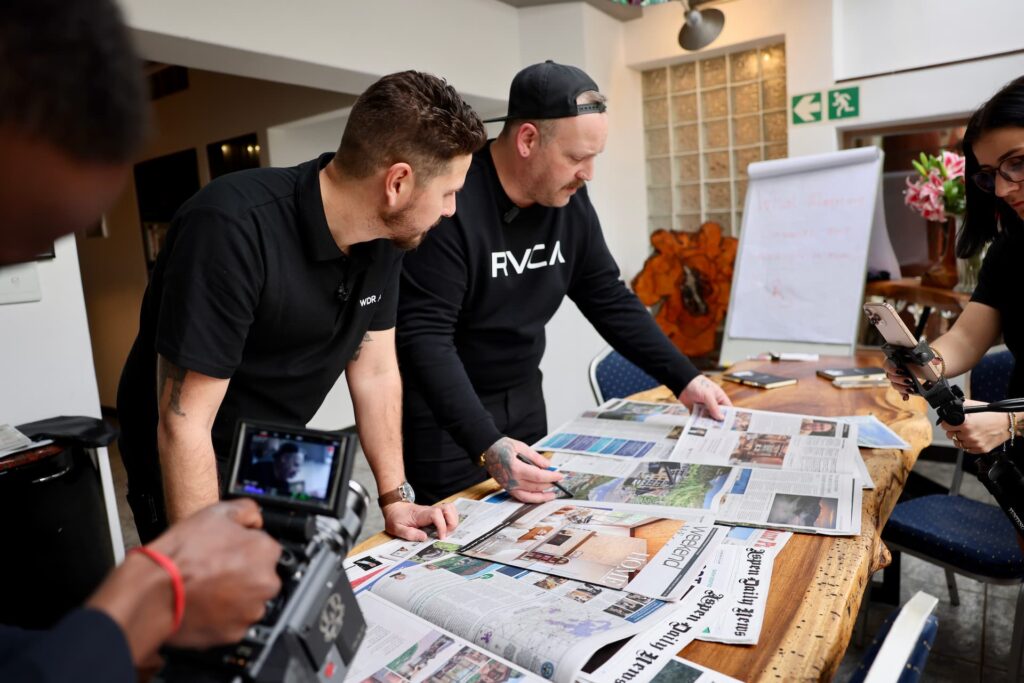
Interview by Bryan Welker and Stefan le Roux | For The Aspen Times
When I sat down with Justin Todd, the newly appointed Managing Director of the soon-to-open White Elephant Aspen, it was immediately clear this wasn’t going to be a conversation about hotel management per se. This was a conversation about people. The people who work here, the people who make Aspen run, the people who sacrifice to stay, and the people who carry the mountain lifestyle forward.
Justin arrived in Aspen in 1999, fresh out of college, alone, in the dead of winter. His first home was employee housing behind City Market; his first job was at the St. Regis during its transformation from the Ritz-Carlton. He didn’t know a soul, but on his very first day, he met his wife. That’s the kind of story that defines the Aspen that locals know and love.
And over 25 years, he left Aspen, returned to Aspen, left again, then came back again—until he stayed for good. Little Nell. Four Seasons. St. Regis. The W. Aspen Meadows. And now, White Elephant Aspen, the valley’s most anticipated luxury opening in a decade.
Q: Let’s start at the beginning. What’s your Aspen origin story?
Justin:
I grew up in Los Gatos, California, but we had a home in Lake Tahoe, so I grew up with skis on my feet. After graduating from Arizona State with a degree in travel and tourism, I was doing my internship at The Phoenician in Scottsdale. The director of sales and marketing offered me two choices: I could stay in Phoenix… or move to a hotel they were taking over in Aspen, Colorado.
At the time, they couldn’t even tell me what the name of the hotel was going to be, but it ended up being the St. Regis, previously The Ritz-Carlton. I didn’t know anyone, so I was worried about where I was going to live, but they told me that they had employee housing behind City Market, so I agreed.
It was January 1999—snowy, cold, the middle of winter when I arrived at the St. Regis, and on day one, I met my wife.
Aspen has a way of giving you everything before you know what you’re getting into.
Q: You’ve left Aspen and returned multiple times. What kept pulling you back?
Justin:
Opportunity, yes—but mostly lifestyle. The mountains. The community. That feeling you can’t describe unless you’ve lived here.
I left for Scottsdale, then to Jackson Hole to help open the Four Seasons, then came back to the Little Nell. I returned to the St. Regis, oversaw sales and marketing for Aspen, Deer Valley, and opened The W. Eventually, I took the GM role at Aspen Meadows to oversee a multi-million-dollar renovation.
But every time I left, Aspen called me back. It always felt like home.
Q: And eventually that led you to White Elephant Aspen. How did that connection happen?
Justin:
When I was GM at Aspen Meadows, I met a guest at breakfast—Khaled Hashem, President of White Elephant Resorts. He asked how they could truly integrate into Aspen, not just as a hotel but as part of the community. We stayed in touch.
When the time came and the Karp family began preparing for White Elephant Aspen’s opening, Khaled reached out. The chance to open a luxury boutique property in Aspen and shape it with a values-first philosophy doesn’t come along often. I knew I wanted to be part of it.
Q: White Elephant made employee housing its first priority. Why did that come before anything else?
Justin:
When I was talking to the Karp family, who own White Elephant Resorts as part of New England Development out of Boston, I asked what their vision was—how the hotel would be different, how they would integrate it into Aspen into the Aspen community. And the first thing they said was: employees.
Their words were essentially:
How do we ensure that we take care of the employees and give them a comfortable place to live that’s not an hour, an hour and a half, or two hours commute from the hotel? How do we pay them a wage where they can still go out and enjoy themselves—on the mountains, socially, all of that?
That was their priority. And they didn’t just talk about it, they acted on it. They went out and bought two homes on four acres, which became three homes, giving us 19 bedrooms within six miles of the hotel in Woody Creek. These are retail homes, purchased on the open market, with their own money, dedicated entirely to staff housing.
We’re furnishing everything. Employees can literally come with their suitcase and almost check into a hotel on the way. That’s how committed this ownership group is.
White Elephant Resorts has been named a Top Workplace in Massachusetts for 11 years running, voted on by employees. On Nantucket, they own nearly 300 beds to support their staff. They are hyper-focused on the employee and making sure the employee comes first.
Q: Why is keeping employees close to the hotel so important?
Justin:
Because it gives them their lives back.
If someone is commuting an hour and a half or two hours each way, that’s their personal time disappearing. From the time they clock out, that time belongs to them, and if it’s spent on a bus to Glenwood or Newcastle, they lose access to the lifestyle that makes this valley what it is.
We’re talking about two to four hours of their day returned to them. That’s the difference between feeling connected to the mountains and feeling locked out of them.
This is the Aspen ideal from the late 80s and 90s. When people lived close to town, worked close to town, and actually enjoyed the thing we all sacrifice to be here for. And I believe in that. Happy employees equal a happy hotel.
We choose to live and work in this valley and make big sacrifices in order to do so. I choose not to live in Toledo, Ohio—no offense to anyone in Ohio, but I choose that because I want this lifestyle.
Q: How would you define your leadership style?
Justin:
Curiosity is everything. Even when I was in sales and marketing, I didn’t just sit in my office. I went into the banquet kitchen, cleared plates, helped with valet, worked with housekeeping, and washed dishes. Whatever it took to understand what the guest and the team were experiencing.
If I ask someone to do something, they have to know I’m willing to do it too. If I ever lose that willingness, I shouldn’t be in this role.
Q: What makes a great employee in your eyes?
Justin:
Attitude. Willingness to help people. Hospitality isn’t brain surgery; I’m not teaching a graduate-level skill. But I do need people who genuinely want to help others. If they have that, we can teach everything else.
Q: How do you handle the emotional load of being the person all problems flow through?
Justin:
I reset outside. Always. Mountain biking the Crown straight from my house in Basalt. Running the Rio Grande. Skiing Snowmass with my wife—one lift, two different levels, meet at the bottom. That’s my release.
Living here means I can reset every single day. And if I can have that, then my employees should too.
Q: You and I talked about the sacrifices required to live here. If you could go back to 1998 and tell your younger self one thing, what would it be?
Justin:
Buy property. That’s the Aspen version of putting money on the Red Sox.
My wife and I have been fortunate—we bought in Scottsdale, Jackson Hole, Blue Lake, and Basalt. But if I were trying to move here today at my age? I couldn’t do it. It breaks my heart how hard it is for families now.
But that struggle also makes us gritty. If you’re here, you’re winning—just by being here.
Q: As the leader of Aspen’s newest hotel, what responsibility do you feel to the community?
Justin:
A huge one. We’re not here to compete against other hotels—we’re all working toward the same goal. The guest who stays with us today might stay elsewhere next time. That’s fine. We share the same visitors, and we share the responsibility of making Aspen work.
My work with the Aspen Chamber reinforces that. Running a hotel here isn’t just about the guests who come through your doors; it’s about supporting the ecosystem that makes this place function. If we’re not strong as a lodging community, nothing else works.
What impressed me most about Justin Todd wasn’t his experience or his titles; it was the clarity of his belief that Aspen hospitality must begin with ensuring the people who work here can actually live here. That’s not something you hear often in luxury hospitality. And yet, it’s the most honest measure of whether a hotel belongs in Aspen or not.
The White Elephant may be new, but under Justin’s leadership, it is rooted in something old and essential—a mountain ethic, a belief in community, and a commitment to the people who make Aspen what it is.
This is the future of hospitality in Aspen: not just luxury, but belonging.
Bryan Welker lives and breathes business and marketing in the Roaring Fork Valley and beyond. He is President, Co-founder, and CRO of WDR Aspen, a boutique marketing agency that develops tailored marketing solutions. Who should we interview next? Reach out and let us know bryan@wdraspen.com