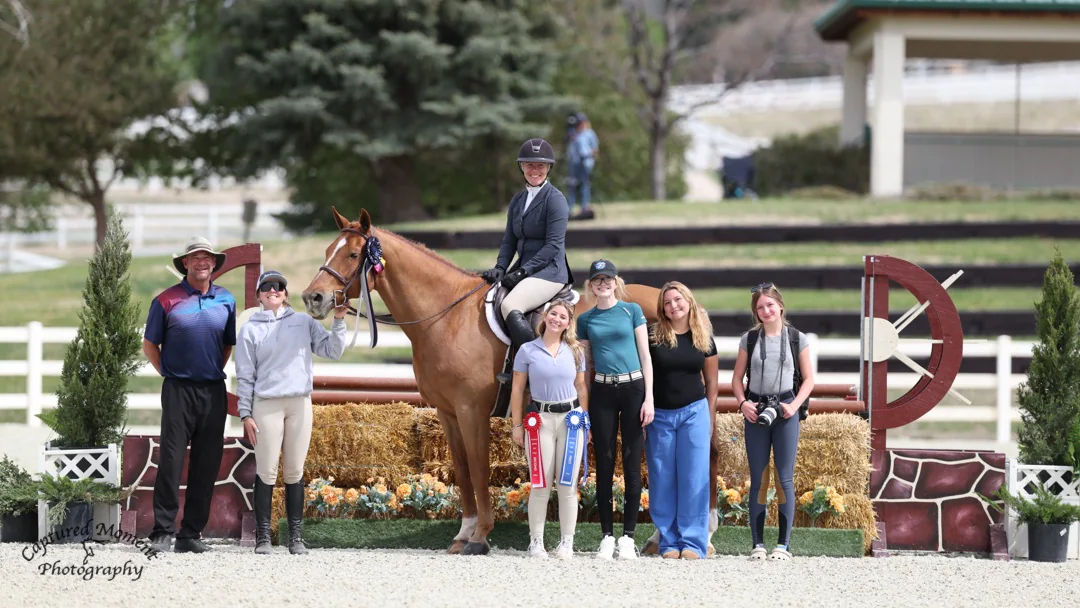
Twin Acres founder Annie Graber-Wells on growing up in Woody Creek, building an equestrian program in the Roaring Fork Valley, and the emotional intelligence horses demand from people.
Interview by Bryan Welker and Stefan le Roux | For The Aspen Times
Annie Graber grew up around barns and wide open pastures. A context that eventually shaped her career path. What began with backyard riding and lessons at a local ranch eventually became Twin Acres LLC, her own hunter-jumper training program based down valley.
But beneath the business itself is something more personal: a belief that horses teach patience, responsibility, emotional awareness, and a quieter form of connection that is difficult to find elsewhere.
Bryan: Tell us your Aspen story.
Annie: I actually grew up here. Both my parents moved to the valley in the ’70s from Nebraska and Missouri to pursue being ski bums. They ended up meeting each other in the ’90s, and then my sister and I were born and raised in Woody Creek. We still live at the same house my parents built in the ’90s.
I went through Aspen Elementary, Aspen Middle School, and Aspen High School. My parents had two horses in the backyard, so I rode from a young age.
I remember seeing an ad in the paper for riding lessons at a local ranch, and my sister and I thought it sounded pretty cool. We tried it, and I don’t think we ever looked back from there.
Bryan: Every horse person I know tells me there’s no money in horses. Why build your life around it?
Annie: You have to love what you do more than the money aspect. The joke in equestrian sports is that you do it for the love of the sport, not because you make money.
But horses bring something out of people that’s very different from everything else. The connection you create with them is something special.
Bryan: Can you expand on the unique connection between people and horses?
Annie: It’s different for everyone. One horse can have five different riders, and every one of them will experience that horse differently based on who they are and what energy they bring.
What makes horses different is that they don’t communicate the way humans do. It’s all silent communication. It comes through feel, touch, movement, and energy.
You have to earn their trust and earn their respect. Once you finally get on the same wavelength with a horse, there’s honestly no better feeling.
People can often give you headaches, but horses don’t talk back to you. They just listen.
Bryan: What do you think kids in particular can learn from interacting with horses?
Annie: For kids, especially, it teaches responsibility in a completely different way. They’re caring for an animal that can’t take care of itself. It teaches teamwork, patience, healthy competition, and discipline.
And unlike other sports, you’re building a partnership with another living being that has its own emotions and instincts.
Bryan: You left the valley for a while before coming back. What brought you home?
Annie: After college I moved to Kansas City and worked for a couple top hunter-jumper barns out there. I learned a lot, but the business can be pretty cutthroat.
Eventually I realized I wanted to build something myself. I wanted to be my own boss. And I remember thinking, “There’s nothing like this back home.”
So I moved back to the Roaring Fork Valley in 2018 and started building Twin Acres little by little. At first it was really small. I bought a few lesson horses and slowly started growing.
I was based out of another local ranch for years, but eventually I hit a point where I felt like I couldn’t grow anymore unless I had my own facility.
Bryan: And that process wasn’t exactly smooth.
Annie: No. My family and I found land in Missouri Heights where we wanted to build and grow the program. What followed was about four years of county fighting, organizational groups coming after us, and a lot of emotional exhaustion.
It was debilitating at times.
Unfortunately, we were denied in the end. But my family and I were steadfast about it. We were like, “We’re not giving up on this dream.”
Eventually, we found another property in a different county and were able to build what we have now. We moved in this February, so it’s still very new.
It’s been a huge learning curve because when it’s your own place, you’re responsible for literally everything—payroll, employees, fencing, ordering supplies, fixing problems, caring for horses—all of it.
But I welcome it because that’s how you grow.
Bryan: What keeps you up at night now?
Annie: Honestly? Everything.
I worry about the horses constantly. Sometimes I’ll wake up at one in the morning and drive up to the barn just to check on them.
I worry about my employees too. I want to make sure they’re taken care of and happy because good help is hard to find, and keeping good people is even harder.
One thing that’s really important to me is that I don’t want to just be somebody’s boss. I work alongside my employees. I help clean stalls. I help fix fences. I help feed horses.
I want them to know they’re valued and heard.
Bryan: What are you ultimately trying to build there?
Annie: I want the barn itself to feel like a safe place. The horse world can become toxic sometimes, especially for kids. There can be bullying, drama, and pressure. I never wanted that environment.
I want this place to feel like a barn family. I want kids excited to come here. I want Christmas parties and Halloween parties where we dress the horses up. I want people to feel comfortable here.
I just want it to be everybody’s happy place, as it should be.
There is something refreshingly old-school about the way Annie Graber-Wells talks about both horses and business. Beneath the facilities, competitions, and logistics is a simpler idea: show up every day, earn trust, take care of people, and create an environment where others want to belong.
Bryan Welker lives and breathes business and marketing in the Roaring Fork Valley and beyond. He is President, Co-founder, and CRO of WDR Aspen, a boutique marketing agency that develops tailored marketing solutions. Who should we interview next? Reach out and let us know bryan@wdraspen.com