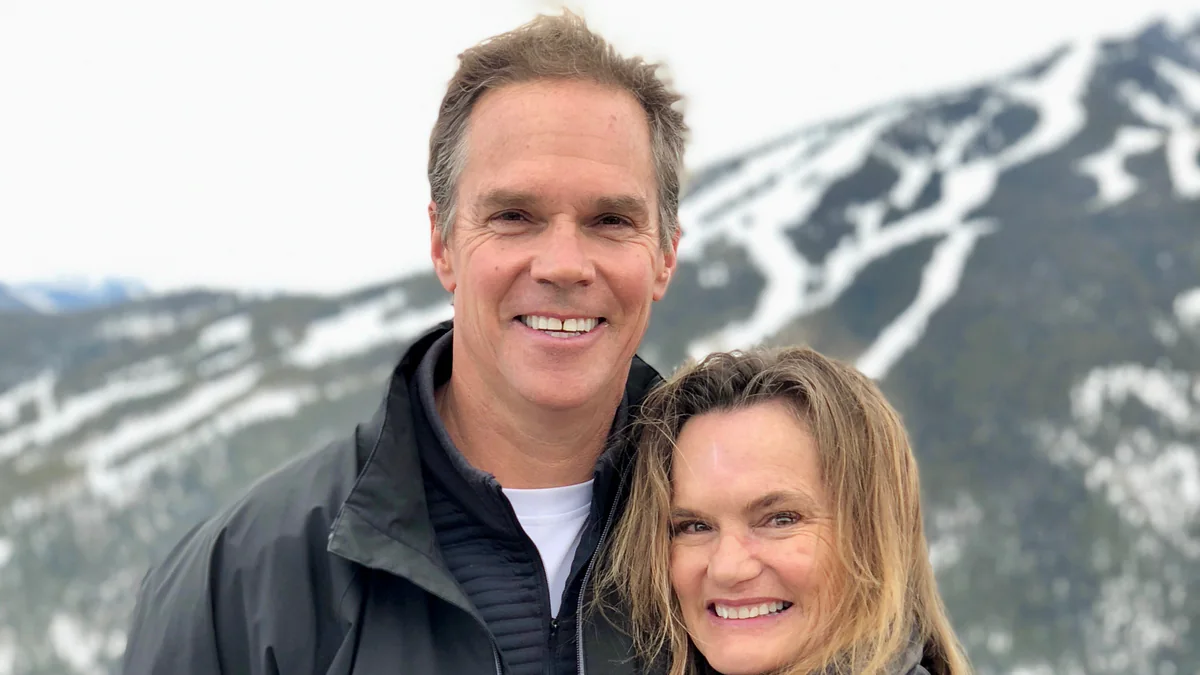
Bob Ferguson on building Jaywalker Lodge, caring for the people who do difficult work, and leaving the Roaring Fork Valley after 26 years.
Interview by Bryan Welker and Stefan le Roux | For The Aspen Times
For Bob Ferguson, the Roaring Fork Valley has represented the possibility of starting again. It drew his family west from Minnesota in 2000 and helped shape his vision for a different kind of recovery program.
In 2005, Bob founded residential addiction treatment center Jaywalker Lodge in Carbondale, building it around the idea that treatment could be an opportunity rather than a consequence.
Now, on the eve of his departure, Bryan sat down with Bob to discuss the journey and his legacy.
Bryan: Tell us your Aspen story. What brought you here?
Bob:
I am from New York, and I ended up in Minnesota when I turned 30. I met my wife, Andy, there. After seven freezing winters, she wanted to move to the mountains. I was apprehensive, but we spent five days visiting the school district and getting a feel for the community.
Before leaving, we played nine holes of golf and were paired with two 13-year-old boys. They gave each other plenty of grief, but they were engaged with us, nice to my wife, and encouraging when she hit shots. At 13, I was a cynical, sarcastic New York know-it-all. I kept thinking that if our children could be that comfortable in their own skin at that age, this might be where we should raise them. That was the hook.
Bryan: How did your own experience lead to Jaywalker Lodge?
Bob:
I spent my 20s struggling with addiction in New York. After multiple attempts to get sober, my parents got me a one-way ticket to Minnesota, where I went to Hazelden and later worked on the administrative side there.
Treatment programs tended to gravitate toward the coasts. I thought a mountain setting offered something different.
Most men who need long-term treatment are not on a winning streak when they arrive. It can feel like the price they are paying for messing up. In Carbondale, surrounded by people willing to give our guys jobs and rent them homes, we could reposition it as an adventure and an opportunity to start again.
Bryan: How did Jaywalker earn Carbondale’s trust?
Bob:
When we eventually opened downtown, I was very conscious of being a good neighbor. I gave town council members and neighbors my cell phone number and told them to call if they saw anything they did not like.
Our men found jobs, and we were the first to volunteer whenever someone needed help—at Mountain Fair, on Adopt-a-Highway, or at the animal shelter. People struggling with addiction take a lot out of communities before they recover. One way to reinforce recovery is to put something positive back into the stream of life. Slowly, we became part of Carbondale’s rhythm.
Bryan: What were some of the biggest challenges Jaywalker faced during your 21 years there?
Bob:
Fentanyl changed the game for treatment providers, families, and addicts. There was no room for error anymore. Everybody lost people in the opioid epidemic.
The other was COVID. We were considered an essential service, but we had a congregate living situation and could not easily social distance. We had to put protocols in place and go to extraordinary lengths to keep people separated, even within our building.
Bryan: What was one of your proudest moments?
Bob:
At our 20th anniversary, about 250 people gathered at Sopris Park. Alumni played music, former staff returned, and men from across 20 years came back with their wives and children. It was like “Field of Dreams.”
Many of them stayed in the community, started businesses, and now have children in the school district. Others opened or ran treatment programs around the country. They went from being part of the problem to part of the solution. Seeing them together was one of the most gratifying experiences of my life.
Bryan: What advice would you give your younger self prior to opening Jaywalker?
Bob:
Your staff will take care of your clients, and your job is to take care of your staff as though they are clients. Give them the best experience and let it trickle down.
This work involves compassion fatigue. People who have direct contact with clients need to get away, recharge, and restore. You lean on your hardest workers, but they are your responsibility. Most of the major crises I managed over 21 years were staff-related. Had I treated the staff more like clients, I could have caught things sooner.
Bryan: How have you experienced letting go of the organization you created?
Bob:
It’s been wonderful. Jaywalker’s current CEO was a client in 2009. He earned his master’s degree, became our clinical director, and eventually edged me out—and that was great, because it is a younger man’s game. The people running it now have fire in their bellies.
My biggest concern was watching it lose its mission and purpose. Instead, I feel grace and gratitude for the men and women who took it over. It is like dropping your child at college. You are sad, but that is the job. The rocket has been launched.
Bryan: What will you miss most about the valley?
Bob:
Getting off the plane. Nothing compares with arriving at ASE, walking down that little steel ramp, and the feeling that you get to call this place home.
And I don’t think people fully know what is happening in Aspen’s school district, either. The teachers helped raise my children as much as we did. The school district is a hidden gem, and I am profoundly grateful for it.
Ferguson’s departure closes a chapter that began with 9 holes of golf and grew into two decades rooted in second chances. He leaves Jaywalker in the hands of people shaped by its mission and departs the valley grateful to a community that showed him how belonging can help people become better versions of themselves.
Bryan Welker lives and breathes business and marketing in the Roaring Fork Valley and beyond. He is President, Co-founder, and CRO of WDR Aspen, a boutique marketing agency that develops tailored marketing solutions. Who should we interview next? Reach out and let us know bryan@wdraspen.com