Chris Davenport on risk, lifestyle, and the fragile economics of a ski town
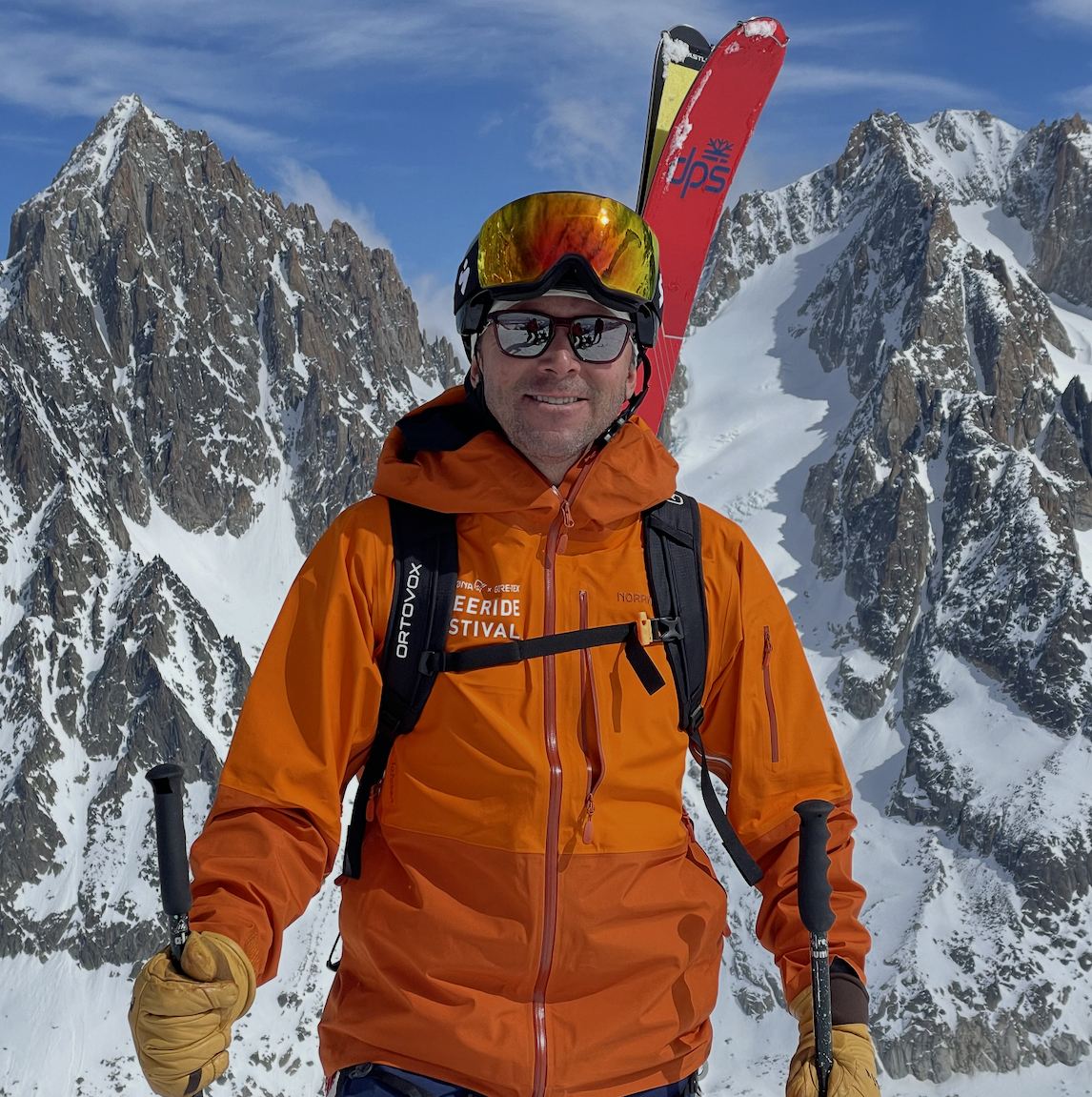
Depending on the setting, Chris Davenport might describe his career in a number of ways, but if he had to distill it into a single phrase, he would probably say: professional risk manager.
Over decades in the mountains—from early big mountain competitions to guiding on peaks like Everest—Davenport has built a career around managing risk with precision. What began as a simple goal to ski every day has become a life shaped by discipline, calculation, and longevity.
Bryan: When someone asks what you do, what do you tell them?
Chris:
It depends where I am. On an airplane, I might say I’m a professional risk manager. On the mountain, I might say I’m a guide. In town, I work in the ski industry. I wear a lot of hats—guiding, product development, working with brands, running trips and camps all over the world. There’s no single answer.
Bryan: Did you plan this life?
Chris:
The only thing I planned was to ski every day for the rest of my life. I remember being a kid in New Hampshire, maybe 13 or 14, skiing on a powder day and thinking, wouldn’t it be amazing if you could just do this forever? That idea stuck.
After college, I moved to Aspen and started working in the ski industry. I realized pretty quickly I was actually doing it—skiing every day. Then I got pulled into the early free skiing scene, started competing, and within a couple of years I was making a living doing it. That part wasn’t planned, but it worked.
Bryan: For readers who might not know, what is free skiing?
Chris:
It came out of what used to be called extreme or big mountain skiing. Instead of gates, you’re given a face with cliffs and terrain, choose your line, and are judged on speed, control, and style. It started in the early ’90s, and I got into it right at the beginning.
Bryan: Were you scared?
Chris:
No. I wasn’t scared—I was calculated. Ski racing teaches you how to commit. I think early on I was a bit naive about the risks, but that changed quickly. I started making ski films, traveling, seeing avalanches, and losing friends. You realize pretty fast how dangerous it is.
Now, 35 years later, I’m focused on longevity. I went through that gauntlet in my 20s and 30s. These days, it’s about continuing to ski, but doing it conservatively.
Bryan: Where does fear fit into that?
Chris:
If fear creeps in, it probably means you haven’t done your homework, or you’ve missed something. By the time I’m standing on top of a line, I’ve already done the calculus. I know what I’m about to do.
Bryan: When I played football, time would slow down when I got the ball. Does that happen to you?
Chris:
Yeah, that’s the flow state. You’re completely focused. In the mountains, you’re thinking about the terrain, the snow, the weather, your line, your partners. There’s no distraction. You’re just in it.
Bryan: Does that mindset translate to business?
Chris:
Definitely. In the mountains, you’re constantly managing risk to get the best outcome. In business, it’s the same thing—market conditions, competition, financial risk, reputational risk.
I often use guiding a client on Everest as an example. You have a plan, but conditions change, so you adapt. Every decision is about improving your chances of success while managing downside risk—no different from running a business.
Bryan: Can you talk about the ecosystem of business around skiing?
Chris:
Aspen runs on skiing—fueling everything from retail and hospitality to real estate. I call what I do the “business of fun.” Whether it’s guiding, designing products, or running trips, it’s about giving people experiences—helping them grow, push themselves, and enjoy life.
Bryan: What’s your exit plan?
Chris:
I don’t have one. Why would I? If your work is your passion, there’s nothing else you’d rather do. I’ll be skiing at 65, 75, hopefully 85. I just want to keep doing it.
Bryan: What does staying fit mean to you now?
Chris:
It’s a mindset. I don’t walk upstairs—I run them. I don’t ski casually—I ski hard. I’m always thinking about training, nutrition, and staying healthy. It’s just part of how I live.
Bryan: What worries you about the future of the industry?
Chris:
Snow. This year is one of the worst we’ve seen. Snowpack is our reservoir—no snow means no water, and it affects everything: tourism, restaurants, retail.
One bad year is manageable. Three or four in a row? That’s a different story. It’s happening globally—shorter seasons, less reliable snowfall. It’s the biggest existential threat we have.
Bryan: What keeps Aspen special?
Chris:
The community. People make sacrifices to live here because the lifestyle is so good. You give up certain things, but you gain something else—access to the outdoors, strong relationships, a sense of place.
It’s easy to complain, but I try not to. We get to wake up every day and choose how we spend it. That’s pretty rare.
Bryan: What advice would you give a 20-something who wants to build a life like yours?
Chris:
Don’t feel pressure to chase something you don’t love. Life goes by fast.
If you love skiing, come here, figure out a way to be on the mountain every day. Maybe you won’t make a fortune—but your life will be rich in experiences and relationships. And those are the things that actually last.
In Aspen, where lifestyle and livelihood are inseparable, Davenport’s perspective is simple: know what you’re optimizing for, do the calculus before you commit, and build a life you don’t want to step away from.
Bryan Welker lives and breathes business and marketing in the Roaring Fork Valley and beyond. He is President, Co-founder, and CRO of WDR Aspen, a boutique marketing agency that develops tailored marketing solutions. Who should we interview next? Reach out and let us know bryan@wdraspen.com