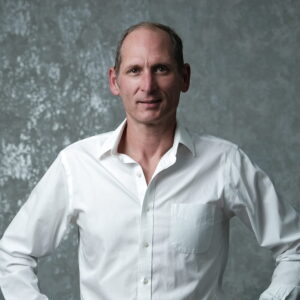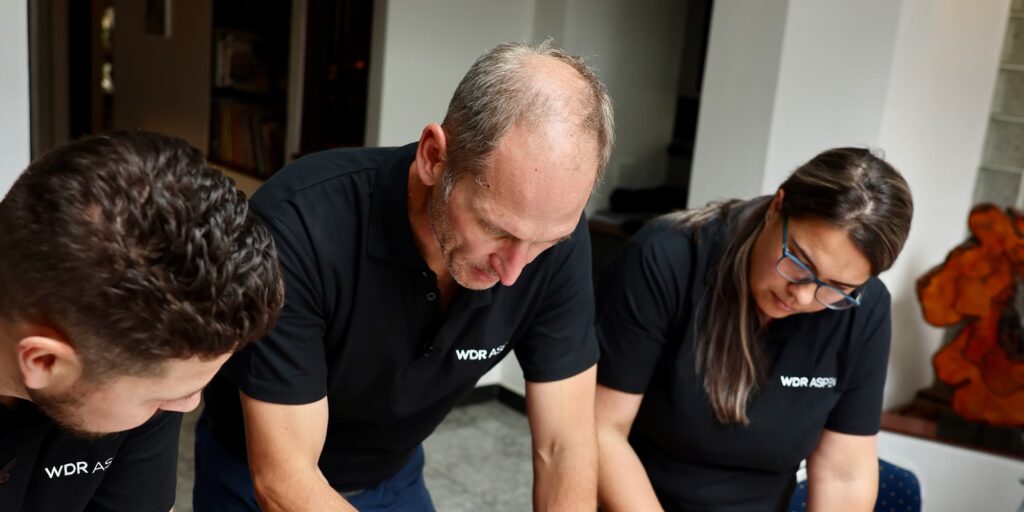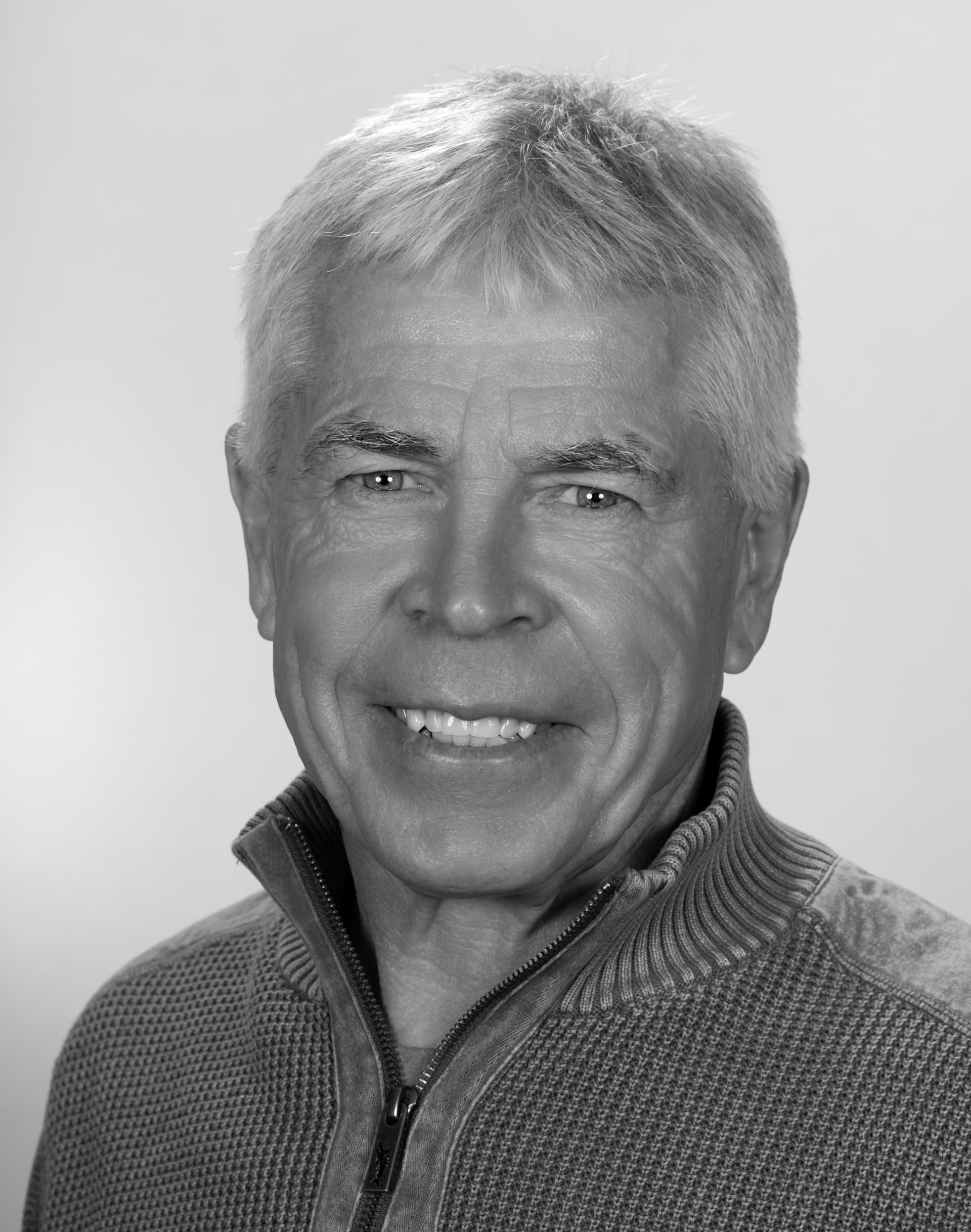
After nearly four decades in the valley, Larry Jones reflects on trust, international real estate, and the rare mix of culture, wilderness, and human connection that continues to define Aspen.
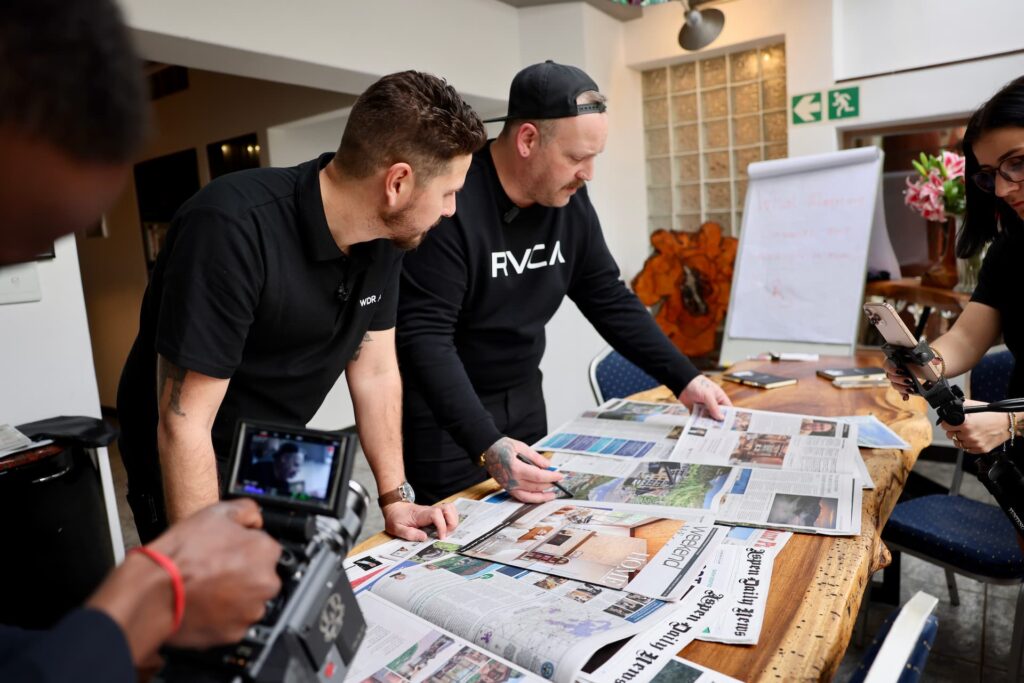
Interview by Bryan Welker and Stefan le Roux | For The Aspen Times
Since coming to town in 1985, Larry Jones has built a career in real estate that grew from local hustle into a long-running specialty working with international buyers. But what makes his story interesting is not just the market knowledge or the record-setting deals. It is the way he talks about Aspen itself: as a place where world-class culture and wild nature coexist, where trust still matters, and where the most compelling part of the business is often not the property, but the people.
Bryan: Larry, we start all of these interviews the same way. Tell us your Aspen story. How did you get here?
Larry:
I was working in advertising in New York City on major national and international accounts. I had two friends who had moved to Aspen and started businesses here, and I came out to visit them while I was trying to find a way to work overseas. I had studied international business and always wanted to live abroad, but visas and work permits kept getting in the way.
At the same time, I was starting to feel ready to leave New York. It is a great city in your 30s, but eventually I wanted more space. Coming to Aspen just felt right. I grew up on a farm in Iowa and spent most of my time outdoors, and Aspen had that same connection to nature while also offering the cultural diversity I had enjoyed in New York. It felt like the best of both worlds.
Bryan: What year was that?
Larry:
About 1985.
Bryan: And the remarkable thing is that, as much as the town has changed, the part that brought you here is still the thing that brings most people to Aspen. We still have all the cultural things you could want and, obviously, all of the outdoors. Has any of that changed for better or worse since 1985?
Larry:
Not so much. I would say the backcountry has gotten more crowded, but not badly. There are still plenty of places where I can bushwhack and get away from things. It doesn’t take much here to find solitude.
When I came here, it just felt like a good balance. What has also been interesting is that once I got into business and eventually into real estate, I ended up doing more international business here than I ever did in New York. Because of where we live, I get to work with clients from all over the world.
Bryan: Working with international clients is your thing. What have you learned from the people you work with?
Larry:
I had dinner recently with some clients from Mexico who now live in Madrid, and it was interesting hearing their perspective on the United States right now. In some respects, they see some of what is happening in the states as a good thing, especially when it comes to law and order. A lot of these people come from countries that are so corrupt that they look at the United States and think in very different terms than we do.
That is one of the things I have found over the years. People from other countries often see this place through a very different lens.
Bryan: Are those international buyers looking at Aspen as a lifestyle purchase or more as a speculative asset?
Larry:
Most of them are lifestyle buyers. I have Brazilian clients who come every January, for example, and others who simply love being here. But Aspen has also historically been seen as a safe place to invest compared with some of their home countries. For many buyers, it ends up being a mix of lifestyle, security, and long‑term investment.
Bryan: What is the most valuable skill set someone could have when working with the type of clients you do?
Larry:
Take a genuine interest in their culture and be understanding of it, not judgmental. Different cultures operate in different ways. If you can accept that and take a real interest in it, they feel more comfortable with you.
Bryan: What are some of the things you have to pay attention to with foreign buyers that a broker working only with American clients might not have to think about?
Larry:
There are practical and financial layers that can get complicated. Foreign buyers often face different tax rules, including potential withholding when they sell a property. Because of that, how the purchase is structured matters from the beginning. Some buyers use layered entities or offshore structures for identity protection or tax planning, and they need U.S. tax IDs and banking in place early. If those details are not handled properly, it can delay a closing for months.
Bryan: Have you seen a big change from COVID to now in the international market? And where are most of the buyers coming from today?
Larry:
Mexico, Brazil, and some from Australia. Australia is actually one of the biggest groups when it comes to skier days because when they come, they stay for a month. Then there is England and Canada.
But geopolitics always affects us. I used to work with a lot of Russians. Now, with the visa situation and the broader political climate, it has gotten much more complicated. At one point, Katie and I traveled to Russia twice and met with clients there. We felt completely comfortable. That is a very different environment now.
So yes, Aspen is affected by weather and market cycles, but it is also affected by global politics in ways people do not always think about.
Bryan: You have been doing international real estate for about 30 years. If you take the 50,000-foot view, what is the biggest thing you have learned?
Larry:
I have always said that wealth is transient. It moves from industry to industry and from country to country. When one industry is hurting, another one is booming. When one country is struggling, another one is thriving. Aspen is a world-class resort, so whoever has the money tends to find their way here.
That part is always changing, but Aspen remains Aspen. The faces change. The countries change. The industries change. But the underlying appeal stays remarkably consistent.
Bryan: Do you still love it here?
Larry:
I do. I love the people I get to work with. Every situation has a different twist and a new challenge, and I enjoy figuring it out. The only thing that sometimes frustrates me now is how quickly technology changes. It can feel like you spend more time learning new systems than actually working with people.
Bryan: If you could go back and give yourself one piece of advice in 1985, what would it be?
Larry:
Keep your contact list like your life depends on it. Keep in touch with people. Keep detailed notes. Over time, you lose touch with people, and that matters.
But more broadly, the advice would be this: if people do not trust you, you have nothing.
I learned that years ago with a client who was one of the biggest developers in the country. I had only known him for about a week, but he gave me power of attorney to sign on his behalf in a situation where timing mattered, and we ended up getting the deal. What struck me was that I never would have gotten that deal if he had not trusted me. That always stayed with me.
Bryan: Where does that come from in you, that desire to be honorable and trustworthy?
Larry:
I’m not sure but it might have come from an old girlfriend. She would never lie to me. She would be brutally honest at all times, and often it would hurt, but at least I knew where I stood.
Bryan: What do you most love about Aspen in its current state?
Larry:
There are always more things to do, more diversity, and it all happens at a world-class level. You have ballet, concerts, science, music, and all of it is world-class, but you are experiencing it in this very small, vibrant place.
Bryan: There is something about this place that attracts the best people in the world.
Larry:
20 or 25 years ago, I used to attend the Aspen Business Luncheon. What fascinated me was the mix of people. You would have local guys who worked on the mountain sitting next to very successful businesspeople, and somehow it all blended together.
One time, a mountaineer who had climbed Everest gave a talk. He showed up in flip‑flops and spoke like a regular guy, yet by the end, all these high‑powered businessmen were gathered around him asking questions. It reminded me that if you are authentic and good at what you do, you do not need to perform some slick business persona.
Bryan: That feels like the Aspen ethos to me.
Larry:
Exactly. And I think a lot of wealthy people who come here want to meet locals. They want to blend in. They want to be treated like equals. That matters.
There are people in town who resent wealth automatically, but I think that misses something important. Some people worked very hard for what they have. Some may not have. But either way, they are still just people. And like anyone else, they are looking for people they can trust.
So my view has always been: be trustworthy, and treat everyone like human beings.
Bryan: Any regrets, Larry?
Larry:
No. None at all. I feel extremely fortunate.
I grew up on a farm in Iowa with a very modest upbringing and not much money. The fact that I was able to go to college, go to graduate school, work in New York on major accounts, and then end up here makes me feel very lucky.
I worked hard, and I will take credit for that. But I also had some good breaks.
Bryan: Was there ever a time when you were working more than one job just to make it here?
Larry:
Oh, absolutely. There was a point when I broke the derailleur on my bicycle and did not think I was going to be able to afford to fix it. I was working at the Aspen Country Inn by the airport, working nights, and trying to do real estate during the day. I did whatever it took to get by.
One of my early jobs here was trying to sell advertising time for KSPN. That was not very profitable. I also did property management while trying to get into real estate.
Like a lot of people who stay here, there was a stretch where it took everything.
Bryan: One last thing. Do you have a favorite international deal story from over the years?
Larry:
I do, but I don’t think I’m at liberty to tell.
There is something fitting about how Larry Jones leaves the story. After all these years, after all the countries, clients, structures, cycles, and changes, he still comes back to the same essentials: trust, discretion, hard work, and a deep appreciation for the place that made room for all of it. In a town that often gets reduced to glamour or price tags, Jones offers a more durable reading of Aspen—one rooted in people.
Bryan Welker lives and breathes business and marketing in the Roaring Fork Valley and beyond. He is President, Co-founder, and CRO of WDR Aspen, a boutique marketing agency that develops tailored marketing solutions. Who should we interview next? Reach out and let us know bryan@wdraspen.com