Family-Owned, One Obsession, and the Making of a Modern Aspen Institution.
Interview by Bryan Welker and Stefan le Roux | For The Aspen Times
Aspen has no shortage of eateries, but it has become increasingly rare to find places that feel both deeply local and uncompromisingly intentional. Silvers Aspen, which opened quietly this past summer, is beginning to stand out for precisely that reason.
Owned by couples with local ties, Silvers is not easily categorized. It is neither a traditional bagel shop nor a conventional market or restaurant, but a carefully considered hybrid shaped by the backgrounds of its founders.
Three months into operations, Silvers has already become part of Aspen’s daily rhythm. What follows is a conversation with Olivia Wheat, Robert Blumenthal, Jake and Skye Lansburgh, about how it came together, what the first season revealed, and what it means to build something thoughtfully in a town that notices everything.
Bryan: Before we talk about the business, I want to start with Aspen itself. What brought you here, and why did it feel like the right place to build something now?
Skye Lansburgh:
I was born here. I grew up in Old Snowmass, started skiing when I was two and went through Aspen Valley Ski School. This place is just part of who I am. I left for a while, came back in 2020 and met my now husband Jake who also grew up here. We both had a strong desire to build something to serve the community that raised us and that we care so deeply about.
Olivia Wheat: Aspen has always been a place I’ve returned to with real affection. I grew up coming here from a very young age. Over the years, no matter where I was, Aspen was always a favorite—and now my sister and her family live here, which has made it feel even more like home. When the idea for Silvers came together, it didn’t feel random, it just made sense.
Robert Blumenthal: I grew up in Miami, but Aspen has always been a place I spent a lot of time in. Aspen is a town that values quality and specificity. If you’re going to build something that’s detail-driven and intentional, Aspen is actually a very honest environment to do that in.
Jake Lansburgh :
I was born and raised in Aspen. My family moved here from Miami in the mid-80s and when we visited our extended family back in Florida, we usually gathered around the great bagel spots in Miami. I always wanted to have something like that in Aspen because places like Silvers become a pillar for the community to gather at, order-in from or pop in just to see a familiar face.
Bryan: How would you describe Silvers to someone who’s never been here?
Skye: It’s a local shop, by locals, for locals—but elevated. It’s casual, but everything is intentional. You can grab breakfast, lunch, or food to take home, or just join us for a cup of coffee.
Olivia: It’s meant to enhance people’s time here. Whether you’re grabbing something on the way to the gondola or stocking your fridge for the weekend, it should feel easy and satisfying.
Robert: I grew up going to a gourmet market in Miami Beach called Epicure, and there I had the best of everything under one roof. That idea stuck with me. Silvers is our version of that, adapted to Aspen.
Jake:
Silvers is your go-to in Aspen when you want a staple sandwich or something more elevated. We’re here for any mood and any person, locals or visitors.
Bryan: Silvers feels unusually specific—the sourcing, the process, the details. Where does that level of intentionality come from?
Olivia:
I worked for a chef in New York who was known for his tasting menus, and he used to have a camera over the trash can in the kitchen. If people didn’t finish what was on the plate, he took it personally. At the time it felt intense, but it taught me something. Now, when I’m clearing plates here and they’re completely clean, that’s the best feedback you can get.
Robert:
We’re obsessive about inputs. The pastrami is a good example. We worked with Lobel’s in Manhattan—a fifth‑generation butcher that’s been around since the 1800s. They sell in four places: their shop, Yankee Stadium, Rockefeller Center, and now Silvers Aspen.
We didn’t just take that on reputation either. We tasted everything. We ordered pastrami from every major place in Manhattan and did side‑by‑side comparisons over several days, because we wanted to see how it held up, not just how it tasted in the moment.
Olivia:
That process mattered. For us, it wasn’t about saying we have the best pastrami in the world—it was about knowing, without question, that what we’re serving is the best version of that product we could source.
Skye:
Once you do that level of work behind the scenes, it gives you confidence to stand behind it. People can taste the difference, even if they don’t know the full story.
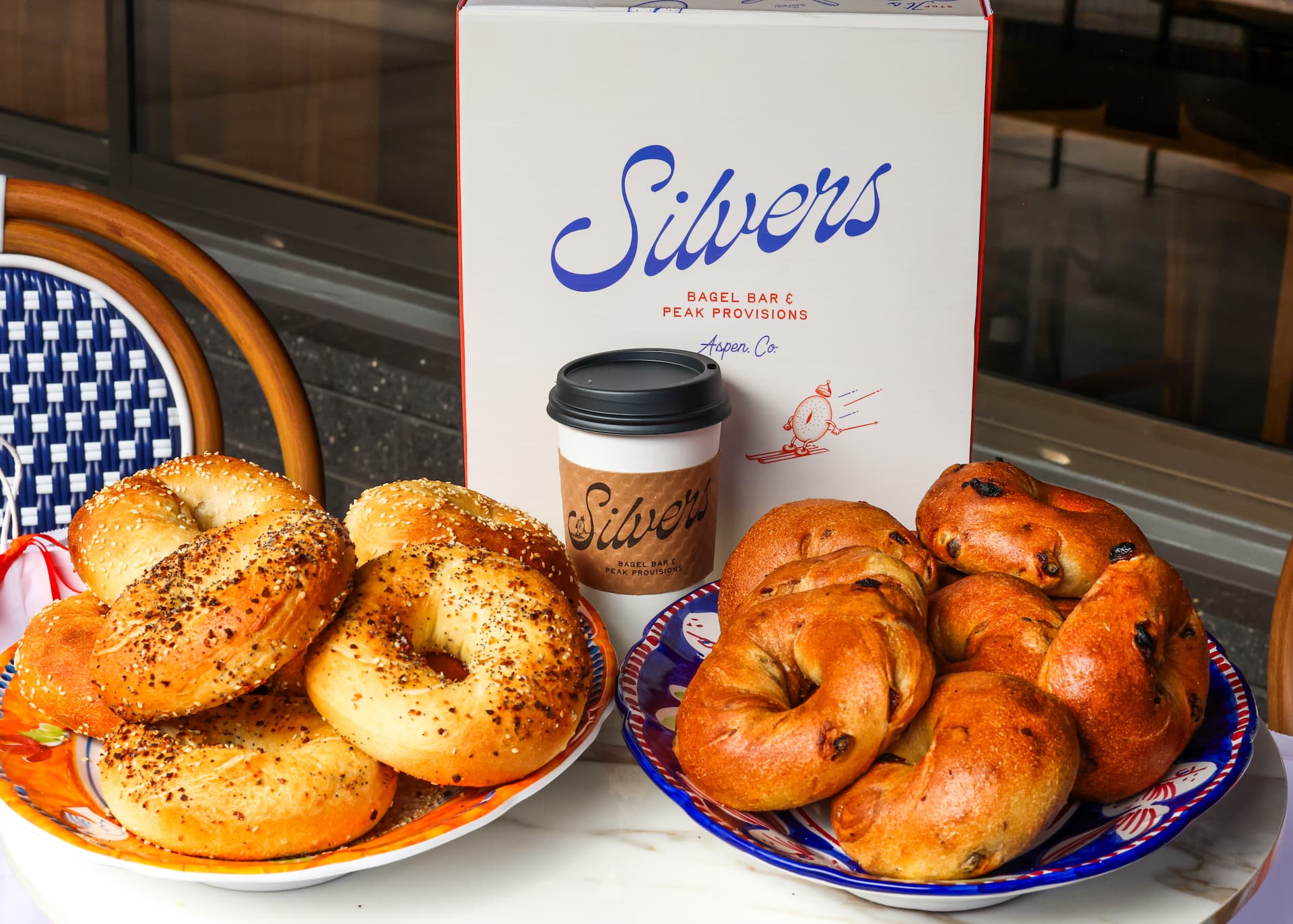
The same goes for the bagels. We wanted to recreate a true New York–style bagel, so we installed a water filtration system that mimics New York’s mineral composition. If we’re going to do something, we want to do it properly.
Bryan: I heard you had some drama with the oven. What happened there?
Olivia:
Right before opening, the wrong oven was delivered. The replacement we needed was quoted at months out, which would have pushed our opening well past summer.
I ended up calling everyone I could find and somehow reached the CEO of a restaurant supply company, who said, ‘If you can get here, we’ll load it.’ I contacted my lyft driver from the night before and asked if he would be willing to help pick up the oven. He agreed and we flew him out, and had it collected and installed just in time for inspection. That moment really set the tone for how this place was built—even if things didn’t go to plan, we were going to find a way to make it work.
Bryan: What did that experience teach you?
Skye: It was stressful, but it was also clarifying. You realize very quickly that if you want something done right, especially in a town like Aspen with real deadlines and real seasons, you have to be willing to step in and solve the problem yourself.
Bryan: Three months in, what has surprised you most since opening?
Skye: The demand. We were making around 500 bagels a day when we opened and selling out by 10:30 in the morning. That told us immediately that there was a real appetite for this, but it also forced us to rethink infrastructure very quickly.
Robert: Storage, refrigeration, flow—those things become critical fast. In a commercial kitchen, everything takes up more space than you expect. You don’t really understand that until you’re living inside it every day.
Olivia: I was also surprised by how particular people are about bagels. We expected preferences, but not the intensity. A lot of people ordered plain bagels just to see if they were the real deal on their own. When your clientele is that specific, you need confidence in your product and the ability to listen without overreacting.
Bryan: You initially thought prepared dinners would be a bigger part of the business. Instead, breakfast and lunch have led. How did that shift your thinking?
Olivia: We assumed people would come off the mountain and want dinner to go. That will still be part of the business, especially in winter, but what really took off was breakfast meetings and lunch. People wanted something that fit into their daily routine.
Robert: Aspen routines are established. You earn your way into them. You don’t force them.
Skye: What we learned is that Silvers is becoming a daily stop—coffee, a bagel, a quick lunch, a place to see familiar faces. Once that habit forms, everything else has a chance to grow naturally.
Bryan: With multiple partners involved, how do you divide responsibilities without stepping on each other?
Skye:
We all come from different backgrounds, and that’s been a strength. Olivia brings deep culinary experience. Robert brings design and aesthetic thinking. Jake comes from a tech and operations background and has been instrumental in thinking about systems and scalability. I focus on management and day-to-day flow.
Olivia: Trusting each other’s lanes is critical. Everyone has a clear role, and that keeps things moving.
Robert: We also all do the unglamorous work. Being behind the counter, ringing people up—that teaches you things you can’t learn any other way.
Jake:
The partnership group is so lucky to have such a unified vision. We’re constantly on the lookout to improve every aspect of the business and we’re usually in agreement about a change or an update. Even if we don’t discuss and one of just does something, we’re always aligned and know that we’re always getting better.
Bryan: Looking ahead, what does success look like?
Skye: Getting our first winter right. Making sure the flow works, the team is supported, and people know they can order ahead and grab and go.
Olivia: Consistency. Every day. Every item.
Robert: Aspen is the proving ground. If something works here—with this community and these standards—it works because it’s solid.
Bryan: You’re early in this. What advice would you give a young entrepreneur three months into their first venture?
Skye: Be adaptable. You start with an idea, but you have to keep iterating based on what people actually want.
Olivia: Ask questions. Listen closely. Make the list. Then do the work yourself.
Robert: Just start. You’re going to fail at some point. That’s part of it. What matters is how you adjust and keep going.
Silvers Aspen is still young, but it already feels settled—not because it’s in its final iteration, but because it was built with patience, discipline, and intention. Every decision, from sourcing to systems to staffing, reflects a belief that doing things properly matters, especially in a town as discerning as Aspen.
In a place where shortcuts are quickly exposed, and reputations are built slowly, Silvers’ greatest advantage may be its restraint: a willingness to earn trust day by day, to let consistency speak louder than hype, and to grow only as fast as the standards that built it in the first place.
Bryan Welker lives and breathes business and marketing in the Roaring Fork Valley and beyond. He is President, Co-founder, and CRO of WDR Aspen, a boutique marketing agency that develops tailored marketing solutions. Who should we interview next? Reach out and let us know bryan@wdraspen.com