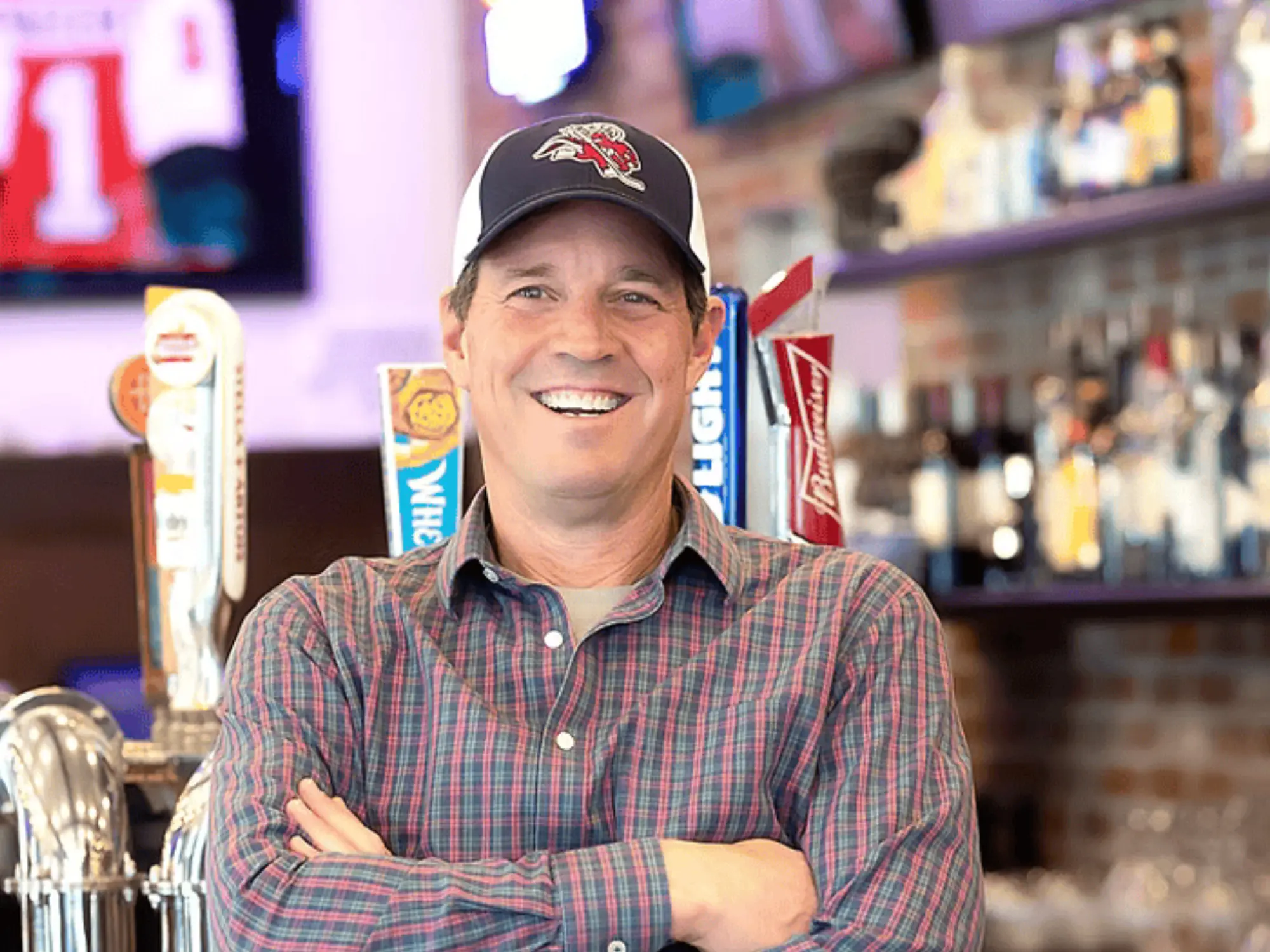
Ed Zane on building bars in Aspen and how creating a locals’ place isn’t something you brand—it’s something you earn.
Interview by Bryan Welker and Stefan le Roux | For The Aspen Times
Spend enough time in Aspen, and you notice a certain type of person who endures without being the flashiest or the loudest. The ones who simply keep showing up—year after year, season after season—while the town changes around them.
Ed Zane is one of those people. What began as a ski‑bum experiment in the early 1990s slowly turned into something much more permanent. Along the way, he built a handful of bars, watched Aspen and Snowmass evolve, and found himself woven into the daily rhythms of the valley in ways he probably never expected when he first arrived.
The conversation that follows moves through those years—the lucky breaks, the lean seasons, the off‑season survival tactics, and the quiet rules that separate places that last from places that disappear.
Bryan: We always like to start with the Aspen origin story. How did you first end up here?
Ed:
My Aspen story probably starts with a decision that had nothing to do with Aspen at all. After graduating from the University of Delaware, I thought about joining some friends to backpack through Europe for a month, but instead I decided to take a year to travel around the United States. I started by looping through the Northeast—New York, Boston, all the way up into Maine—then into Canada, through Chicago, and eventually all the way down to the Keys.
I was traveling mostly through friends of friends. Someone would say, “Call my friend at this school—you can crash on their couch for a few days.” So, I’d end up bouncing between different colleges and towns along the way. Eventually, that chain of connections led me west to Colorado.
I had buddies from high school working at the Timber Mill in Snowmass. They got me job there and gave me a place to stay for the remainder of the ski season, so I crashed on their couch and became a snowboard‑ski bum. I was hooked. The plan was simple: Continue my trip around the US, spend the summer at the beach in New Jersey where I grew up, and then return to Aspen to give the mountain life a shot for a year.
Bryan: And that one year turned into a life.
Ed:
Like it does for a lot of people. That first year, I had five or six jobs. I worked at the old Paragon. I worked at the Caribou Club. I did electrical work. I bartended. One year became a few years. I was a snowboard instructor for six or seven years. I substitute taught at the Aspen School District. I coached youth baseball in the summer. I was just trying to get my foot in the door and stay.
Then one summer, I heard about this job taking Europeans on camping tours around the states, so I did that. That fall, I went to Spain, taught English, traveled Europe for a while, and came back at the end of the summer of ’96, not really knowing what I was going to do next. I have a teaching degree in Social Studies, so I started putting my resume together.
Then my old roommate called and told me that the owner of the bar where I had worked, Zoom’s Saloon, said I could have my job back, and the room I used to rent was open again. So, I came back out, thinking I might pursue a teaching position in Aspen. But, by the end of that ski season, the owner wanted to move on. That was the year I bought the bar in Snowmass—1997.
Bryan: What was Snowmass like in 1997?
Ed:
Honestly, not much different in some ways. The first few years were tough. I thought about selling. There were a couple of recessions. 9/11 hit and crushed us. There were years when we really had to ask ourselves if it made sense to keep going.
Then, around 2002 or 2003, we “cleaned house” in the kitchen and started making the food the way I always wanted it made — more homemade, more care, better quality. I had hired a guy, Chicho, who was originally from Puerta Vallarta. It was just the two of us that season. We were putting in 16 hour days. In addition to our wings and Philly Cheesesteaks, he put together a Mexican menu using his mom’s recipes. That year it just took off. That was when we really found our stride.
Bryan: How did expanding beyond Snowmass come about?
Ed:
I was always looking for something in Aspen. I had heard that McStorlie’s was in trouble and that the owner was looking to get out. Eventually we worked out a deal, and I took it over in 2006. That It was a struggle there at first, too, mainly because we had to rebuild the reputation and introduce ourselves to Aspen.
The big thing was the kitchen. We knew what had worked in Snowmass, so we upgraded the equipment and the quality of the food. We decided to stay open that first year through the spring off-season when everything else was closed. That’s when the locals discovered us. Once people realized the food was good and reasonably priced, it really took off.
The Willits location came right in the middle of COVID-19. That was a crazy time to open anything, but we were already deep into it. We were only about 85 percent done when everything shut down, but we had to keep going. In a way, that location is also my safety net, as we own the building. It gives us long-term security that we can’t get by leasing.
Bryan: That’s a huge point for local business here. The ones who survive long-term usually own something.
Ed:
If you don’t own, or at least have a long-term deal, it can make you vulnerable. You can lose your livelihood just like that.
Bryan: What do you think has kept your places going all these years?
Ed:
Affordability, first of all. We’re one of the most affordable sit-down places to eat. A lot of people think of us as just a bar, but the majority of our sales are food. Walk in any time of day or night, there are always people eating. Almost everything is house-made, cooked to order at a reasonable price. There’s nothing on the menu over twenty bucks.
We also keep our kitchens open until midnight, year-round, at all three locations. That consistency matters. If people know you’re open, they come. If you can’t keep consistent hours, people stop trusting you. And once they stop trusting your hours, they stop coming back.
Bryan: That’s especially true in Snowmass, where the off seasons can be brutal.
Ed:
Snowmass has always been about managing the off seasons. The challenge now is that things have gotten more spread out. The mall isn’t the center of everything the way it used to be. There’s a push toward the Base Village and Elk Camp, so when it gets quiet in the mall, it gets very quiet.
We’ve evolved. We close in the spring now because it just makes more sense, but when we are open, we’re open. Minimal staff, yes, but consistent hours. That’s a big part of surviving there. We built a reputation for being the late-night place. Ask a concierge about where to go for a late-night meal, and they know Zane’s is open.
Bryan: What about Aspen? What’s the biggest challenge there?
Ed:
A lot of it still comes down to whether there’s snow and what the season feels like. Staffing is always part of it, too, but we actually do okay there.
Bryan: Staffing is the biggest issue for most of the people I interview. What’s the secret to doing okay in that department?
Ed:
I think one reason we keep good people is that we run lean, which means they need to hustle more, but the reward is greater. We don’t share tips. You keep what you earn, but you do the work. There are no back waiters, no extra layers. I have high expectations, but I don’t micromanage. The self-motivated ones stay. The ones who can’t handle it eventually leave.
Bryan: What defines a good employee?
You’ve got to be on time, willing to work, ambitious enough to see what needs doing without being told, and you need to care about the place.
Bryan: Your places have always felt genuinely local, which is different from just saying you cater to locals.
Ed:
Exactly. We didn’t set out to be “the locals’ place.” We just became it.
We are locals. We’ve created the kind of place we’d like to hang out. It’s like being cool—if you’re trying too hard, it’s not going to work. It seems every new restaurant that comes to town says it’s going to cater to locals, but what does that even mean? A local discount? A bar menu? It’s usually just a buzzword.
If you want to be a real local place, you’ve got to be affordable, consistent, and actually part of people’s lives. That can’t be manufactured.
Bryan: There’s also this tension in Aspen between owner-operators and what you might call hobby restaurateurs.
Ed:
Hobby restauranteurs with deep pockets are hard to compete with. Their restaurant isn’t their livelihood, so they can operate at a loss. Those deep pockets and a willingness to use it also contributes to driving up rents. It makes doing business here even harder because you have people doing whatever they need to do to fill their dining rooms even though they are losing money. They can absorb the loss while a local owner/operator can’t. It doesn’t hurt them to walk away when they tire of it.
But for those of us who live here, raise families here, and depend on the business, it’s different. We can’t just burn money to seem busy.
Bryan: So, what advice would you give a younger person trying to start a bar or restaurant here?
Ed:
Be prepared to work. Really work.
A lot of people see an owner and think they’re just sitting back while the place runs itself. They don’t see the years of scraping grease off fryers, ripping up carpet yourself to save money, fixing plumbing, fixing equipment, painting, eating every meal at the restaurant, living on almost nothing and sticking it out long after the honeymoon period is over.
That’s why a lot of places fail. People give up too early, or they think they’re buying themselves freedom. You can eventually get there, but in the beginning, it’s the opposite. It becomes your life. You have to be there all the time.
Bryan: What has the Aspen community meant to you over the years?
Ed:
Being involved matters a lot to me. I went to school to be a teacher, so I’ve always had that connection with kids. I was a snowboard instructor for years. I coached baseball and softball pretty much from my first years out here. That evolved into my current roles as head softball coach and assistant hockey coach at Aspen High School. I volunteer at Aspen Junior Hockey, where I not only coached, but became a member of the board, of which I am now president. I also volunteer in the kitchen at St Mary’s, most recently for their annual St Paddy’s Day Dinner.
To me, being part of a community means giving back. I’m not just showing up for my own kids. I’m showing up for everybody’s kids.
Bryan: Coaching youth sports taught me a lot about leadership. I think it made me better at business.
Ed:
It goes hand in hand. Managing a restaurant staff isn’t much different than managing kids on a baseball field. A lot of the same principles apply.
And I love that part of it. I still hear “coach” when I walk through town. That means something.
Bryan: It also says something about Aspen when that kind of volunteerism is still part of the fabric.
Ed:
It is. And it was a big part of what helped me understand Aspen differently than when I was younger.
At first, when you’re a ski bum, you think Aspen is just the mountain, the bars, and the party scene. Then you start coaching and working with kids, volunteering in the community, and suddenly you meet parents with regular jobs, families, routines, and school schedules. You realize it’s actually a real town.
That side of Aspen has always meant a lot to me. And in some ways, I do think it’s shrinking. Not disappearing but changing.
Bryan: If you could change one thing about Aspen today in relation to business and community life, what would it be?
Ed:
I’d go back to the days when four or five friends could rent a place in town together. When people who worked here could actually live here, walk into town, bike into town, and be part of the everyday life of it.
That gave the town a vibrancy. It’s why the old watering holes mattered. Everybody had friends in town. You made the rounds. You ran into friends everywhere you went. As people started relocating or made the move down valley, a lot of that started drying up.
That’s still the thing I miss most—that feeling that the town belonged to the people who actually worked in it.
Ed Zane runs lean kitchens, fixes his own equipment, and stays close to the day‑to‑day work. That hands-on style has carried him through decades of Aspen’s ups and downs, but it’s also clear that the restaurants are only part of the story.
Between coaching youth sports, serving on the Aspen Junior Hockey board, and staying involved in the lives of local families, Zane’s connection to the valley extends well beyond the bar top.
Bryan Welker lives and breathes business and marketing in the Roaring Fork Valley and beyond. He is President, Co-founder, and CRO of WDR Aspen, a boutique marketing agency that develops tailored marketing solutions. Who should we interview next? Reach out and let us know bryan@wdraspen.com