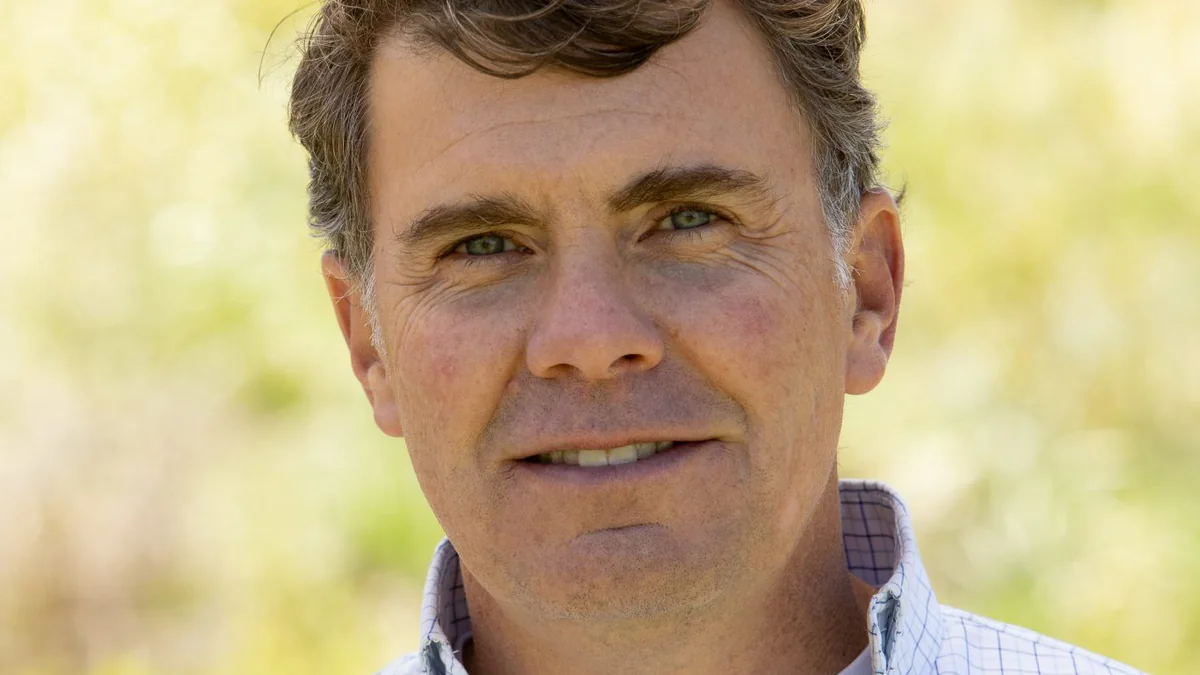
After three decades in the Valley, Tom Sherlock reflects on SH Built and the complexity of mountain construction.
Interview by Bryan Welker and Stefan le Roux | For The Aspen Times
In 1995, Tom Sherlock and his wife packed up a car and a U-Haul, left the East Coast, and headed west for what they thought would be a single ski season.
What followed was years of hands-on work, a reputation built project by project, and eventually a construction company shaped as much by relationships as by craftsmanship.
Bryan: Tell me about how you got to Aspen?
Tom: My wife and I came in 1995. We were just out of college, and we thought we were coming out for the ski season. We ended up staying. We had friends living in Carbondale, so we lived there for many years, then in Marble, and eventually moved to Snowmass around 2002.
Bryan: What were those early years like?
Tom: We both worked at the ski company. We learned how to ski ourselves, and then learned how to teach it. In the summers, I did painting, carpentry, and whatever hands-on work I could find.
I grew up in the construction industry. My dad thought he had taught me how awful it was, but what he really did was give me a taste of every trade. I consider myself a jack of all trades, master of none. I started doing home maintenance for property managers, and over time, that turned into bigger projects.
Bryan: When did that become a company?
Tom: I worked for a couple of years as a superintendent for other builders, then started doing maintenance work on my own. That led to someone asking, “Do you think you can remodel this place for us?” I said, “Yeah, let’s give it a try.”
We performed well, and that helped propel us into the next project and the next one. In 2005, we made the company official.
Bryan: What is different about building and remodeling in Aspen?
Tom: Building and remodeling in Aspen is a whole different ballgame. With remodeling, you have a team of designers and advisors, and everyone needs to agree on preferences and decisions. It takes time to get everyone on the same page to ensure everything is just right. Then there’s the neighbors, the building department, homes built long ago with challenging existing conditions, and clients who expect the best!
Building a new home can be more fluid. However, the same attention to quality, schedule, and budget expectations is still required.
Bryan: What has changed most since COVID?
Tom: Cost is the biggest variable. The residential real estate market and construction costs both seem to have doubled. The cost of living is higher, and materials cost more, so all trades cost more.
The Aspen demographic feels like it has broadened as well. More people are coming from more places than before. Expectations are higher than ever. The ability to work remotely is a contributing factor.
Bryan: A lot of businesses talk about the labor pool. How do you deal with that?
Tom: It is definitely a challenge. For us, it is not only about finding people. It is about making sure subcontractors have enough bandwidth to handle our project, are properly qualified and insured, and bring a strong crew in.
That pushes us toward working with more established companies. They tend to offer better pay and benefits, which attracts a more sophisticated tradesman and that creates a more elevated product for our clients.
Then it becomes about communication and expectations for the subs. We aim to build success for everyone on the team—clients get what they want and we manage fair agreements with the subcontractors.
Bryan: What do you attribute your staying power to?
Tom: Fortitude, a need to survive in a challenging market, and wanting to always do my best. Reputation matters, and so does understanding what clients expect.
Some people are more budget-driven, while some have a very specific design intention, which could put budget or the schedule as a lower priority. The important thing is constant communication.
When I first moved here, I was a pretty high-strung East Coast person. I have slowly learned to be more patient, but still persistent. This is a small valley. You cannot just say, “We’ll get a new plumber.” You have to make it work with people—subs and clients included. Reputation matters with both.
Bryan: What is the hardest part of building in Aspen?
Tom: It is not one thing. We are building very complex, high-performing homes in a very challenging mountain environment, for the world’s leaders as clients who expect their money, quality controls, and their schedule to be managed exceptionally well.
As construction managers, we are in the middle. We need things from the architect, the building department, the client, and the consultants. We work hard to manage & balance quality, schedule, and budget. In the industry, the old saying is “quality, schedule, budget: pick two,” but in Aspen, people expect all three.
Bryan: What is your favorite summer activity in Aspen?
Tom: Mountain biking. I live bike-in, bike-out in Snowmass, and I bike every morning. I ride North Rim, Seven Star, and Skyline Ridge.
I love hiking too, and I love eating al fresco in town. Sitting outside on a 65-degree evening in Aspen is as good as life can get.
There are few industries more demanding than construction, and few places more exacting than Aspen in which to build a life over time. For Tom, the reward lies not only in handing over a home after all the blood, sweat, tears, and heart that went into it, but in the life that work has made possible: mornings on the bike, time on the trail, and evenings in the mountains with his family.
Bryan Welker lives and breathes business and marketing in the Roaring Fork Valley and beyond. He is President, Co-founder, and CRO of WDR Aspen, a boutique marketing agency that develops tailored marketing solutions. Who should we interview next? Reach out and let us know bryan@wdraspen.com