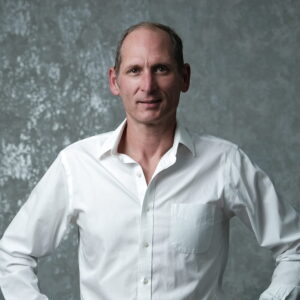
Bob Bridger on Apple, his conversations with Steve Jobs and the experiences that changed how he measures a meaningful life.
Interview by Bryan Welker and Stefan le Roux | For The Aspen Times
During 13 years as Apple’s vice president of real estate, Bob Bridger helped shape hundreds of stores around the world, including the famous glass cube on Fifth Avenue.
Bob’s time at Apple culminated in a deeper understanding of what matters most, and soon after leaving his position there, he arrived in Aspen, where he discovered the true value of community as he confronted his own mortality.
Bryan Welker sat down with Bob to reflect on his time at Apple, his conversations with Steve, and why making magic is better than making money.
Bryan: Do you remember the first time you laid eyes on Aspen?
Bob:
Yes. I came to visit a friend who had said I should come. I had only visited Vail, so I was a Vail person until I came to Aspen. I remember driving over, seeing Mount Sopris and realizing, “Wow, okay, this is a different place.”
Then you arrive in Aspen and see the topography and the charm of the town. It is just so different. That was back in 2014. In 2015, I moved here with my family, intending to stay for a year, and I’m still here.
Bryan: How would you describe yourself and your career?
Bob:
It’s an interesting question because one of the things I always liked about Aspen is that when people here ask you what you do, they’re asking whether you ski, snowboard, or uphill, right?
To answer the question, I have built and created some amazing spaces and buildings throughout my life. I came from a blue-collar family—my dad was a bricklayer and stonemason. When I was 10 years old, I remember looking at his drawings in the garage for different projects and thinking about how amazing it would be to be responsible for building the whole project rather than only doing the masonry.
I went to a high school that offered building trades programs and architecture classes. We built a home every year, which we then sold to support programs at the school, if you can believe it.
Bryan: What did you learn from actually building a house at that age?
Bob:
We had Building Trades Level One and Level Two. Initially, you built a stage for an awards ceremony at the high school. In the second year, you built the house. We went into the field and did the framing, drywall, and everything other than the electrical and plumbing.
You learned about getting your hands dirty. But there is something deeply rewarding about creating something. There seem to be fewer professions now where people actually make something, and that appears less interesting to some younger generations.
When you watch something come together and see how it can affect someone, even if it is a simple home, it is incredibly rewarding. I have had the chance to create inspirational spaces that positively affect people and communities. You do not often get to make something and then watch how it changes someone’s life.
Bryan: You eventually did that at the highest level, working with Steve Jobs and Ron Johnson to create the Apple stores.
Bob:
Steve and Ron were instrumental in creating what people now experience in Apple stores. It was a real treat to spend time creating those places together.
I believe we completed 357 stores during that period, although I would have to confirm the exact number. It was a lot of stores.
Bryan: Aspen is going through an interesting period. Longstanding local businesses are disappearing while more corporate and luxury brands arrive. What did Apple teach you that might be useful to local businesses?
Bob:
The thing that is always important, and I think many local businesses do this beautifully, is being part of the community and adding something to it. Every time someone comes into your place of business, they should leave feeling that something improved for them and that they want to return. There should be a sense of an uplifting experience.
Sometimes it is something really simple: a gracious greeting and a friendly conversation. A lot of Aspen businesses are like that. But there is also a lot of stress and strain involved in running a local business. Even the little things can be missed, like greeting someone when they come in and making them feel at home.
It is difficult because the pool of staff we can hire here is limited. One thing we learned at Apple was that we could create a beautiful setting, but the people in it, serving the brand, were ultimately the most important part of the experience. When you walk into an Apple store, the people are gracious and helpful. They are there to make a difference for you in that moment. Their opening mantra is essentially, “How can I help you?” They really care.
We treasure the local businesses that are here. The tricky thing is that people come to Aspen from all over the world with certain expectations. They seem to like the local businesses, but they also like the Madison Avenue and Fifth Avenue storefronts.
Locals may not shop at all those stores, but visitors who bring vibrancy and revenue to the community appreciate the combination.
What concerns me is the imbalance that is developing. When larger brands occupy multiple spaces and projects remain unfinished for extended periods, they remove businesses and places that were near and dear to the community. Small local restaurants we cherished are being replaced by higher-end and more expensive restaurants that do not necessarily know your name.
We like walking into a restaurant and seeing people we know. Their children go to school with our children, or they have been our friends for decades.
Whenever other brands reach out to me, I urge them to include local people. At Apple, about half the employees in any new store we opened were local. It made a huge difference. You had a blend of local employees and people who came with experience from other Apple stores.
We would also bring much of the staff from a new store back to headquarters in Cupertino to learn about the culture before returning to their community. It was about finding that blend and recognizing both the importance of the local community and the brand you were representing.
Bryan: There is a difficult tension between preserving Aspen’s character and recognizing that property owners and businesses have their own financial interests. How do those things coexist?
Bob:
It reminds me of an experience I had in Sydney. There was a wonderful family that owned a prominent piece of real estate. They had spent decades getting to that point, and the property could accommodate as many as three storefronts.
I told them, “You could get more rent from two or three separate retailers, but for my business model, this is what I can pay to occupy the entire base of your building.”
I said, “Where you will make the money is not necessarily in what we create here. The rent will still be great for you, but we are going to create something around it, so you should buy the building next door.”
We brainstormed about how we could change that part of Sydney. Three years later, he called me and said, “You were right. I have the highest office rents above your store, and Louis Vuitton has leased the entire building next door—the building you told me to buy.”
That happened because we created something together. The tenant and the landlord can make a difference together.
In some ways, landlords, tenants, and the community all have to embrace the idea of cherishing what exists while remaining open to something new that reflects the community’s character. It is a very interesting dance.
At Apple, the first thing I would do upon entering a community would be to meet with its municipal leaders. A mayor might ask, “What can I do to help you?”
I would say, “No, I want to help you. I want to bring technology jobs and something more to this community. Where do you feel that is needed?”
There has to be that sense of collaboration. Sometimes you need a catalyst. Community leaders, business leaders, and landlords could be well served by working together and saying, “Let’s foster this idea.”
Otherwise, Aspen could become a row of international luxury storefronts that feel a bit soulless to local people. What we are looking for are the shops that represent who we are: the bike shops, the ski shops, and the places where we can have lunch for $20 instead of $30 or $40. Those are the places we cherish.
How do we foster that? Unless the community participates in shaping the story, other forces will control it, and it will continue on its own.
You cannot halt progress. You have to embrace it.
I remember driving home from Grand Junction after my flight had been diverted there, as sometimes happens when you cannot get into Aspen. I spoke to a woman who I think was 82. She talked about how much Aspen had changed. She said she had been incredibly progressive when she was younger, but now she did not want anything else to change.
That stayed with me because one of the beautiful things about Aspen is that it is a progressive place of change while also possessing magnificent history and a character we want to preserve. There is a balance.
This has been a progressive place for decades. We should understand that Aspen is going to change and recognize that change as part of what many of us celebrated when we first came here.
Bryan: You were at Apple from 2002 to 2015. How closely did you work with Steve Jobs?
Bob:
Very closely. I first met Steve when I was a general contractor, and we were building Pixar Animation Studios together. That was before he returned to Apple.
There are so many amazing stories about Steve that I could probably write a book, although Apple’s culture does not encourage people to write too many stories after they leave.
In Steve’s final days, he told Apple’s leadership that he was going to focus on three things: the phone, the new campus, and the stores. I remember going to him and saying, “Steve, two of those three things are you and me.”
He said, “That’s right. We’re going to spend a lot of time together.”
He asked me to work on the campus concept with him alongside the architects from Foster + Partners, so I spent a lot of time with him in his final days. It was an incredible series of moments.
We would finish going through the Apple work, and Steve would lean back and ask, “Anything else?” If there was nothing else, we would simply have conversations. It was moving because he shared several important thoughts with us during that period.
Bryan: What did he tell you?
Bob:
One thing I remember him saying was, “When I’m gone, do what you know is right. Don’t attempt to do what you think I would do.”
Context changes. Applying that to life, you should trust your own judgment about the situation you are in. Do not keep looking back and asking, “What would Bob do? What would Steve do? What would Ron do?” It was a reminder to believe in yourself.
Another thing he said was, “We got where we are because, when we knew something was great, we would bet the company on it.”
He said, “Do that. Be fearless. Don’t hold back, because your tendency as you gain success is to become cautious. The moment you become cautious, you are no longer what you were.”
It is such a simple concept. The more you have, the more you feel you have to lose, and the more conservative you tend to become.
My philosophy since hearing that has been that you can always make more money, if money is important to you, but you cannot make more magic. If what you are doing is meaningful, whether you are creating a space, making art, or caring for someone, do it in a way that represents your absolute best.
The other thing Steve always asked was, “Are we doing our best work?”
Whatever you do, do your best work. We had a term for it: an intolerance for mediocrity. When someone says, “Well, it’s good enough,” it makes me cringe.
Bryan: One of Apple’s most recognizable pieces of work is the glass cube on Fifth Avenue. How did that idea emerge?
Bob:
A real estate person at Apple had proposed doing something more conventional in an available retail space in a fairly nondescript building on Fifth Avenue. It was well positioned, but there was another location nearby—a plaza that had always been unsuccessful.
That location was presented to us with the warning, “This is available, but it has never worked.”
Steve asked Ron and me what we thought. I said, “I don’t know. That’s at the corner of Central Park and Fifth Avenue. It is a magical spot.”
The design team, particularly Peter Bohlin of Bohlin Cywinski Jackson, started drawing things. We could not construct a conventional building on the plaza, so we asked, “What if we build a vestibule? A vestibule is not really a building.”
The idea became a glass element sitting above an underground store. It would be incredibly pure—a perfect form, which was something Steve always appreciated.
Then came the journey of telling that story to the New York City planning department and helping them embrace it. We built models. We would pull one out, remove the veil covering it, and watch people’s reactions. They would look at it and say, “Ah, that would be perfect.”
We called those ideas inevitable. The cube felt so inevitable and so perfectly situated.
Bryan: How do you find those “inevitable” ideas?
Bob:
You find it in nature all the time, especially in Aspen. You walk along a trail, see the aspen trees, and recognize a beauty that feels as though it was meant to be.
How do you create places, spaces, and experiences that feel inevitable? It is an incredible mission. It is easy to describe, but very difficult when you are in it.
When you move through a space and feel moved by it, that response comes from an aggregation of incredible work. It is not one detail.
Rome is emotional in that way. Stop and look around. You will find this incredible accumulation of the simplest details. The Italians are masters of it. You see tiny things and realize somebody cared enough to put tremendous effort into them.
Over time, I have found that doing something with that level of care and commitment to excellence does not necessarily take much longer than doing it with less emotion. If you are building a space, you still have to install the drywall, molding, and trim. Doing it in a way that can make a difference in someone’s life does not take that much more time. It is simply a way of existing.
You look at things with a certain level of care. If you view your work as an opportunity to make a difference in the world, everything you do can have an impact on someone else.
Bryan: How does that philosophy fit into the concept of perfection?
Bob:
We moved away from the word “perfect.” Perfection is not achievable, but excellence is.
The pursuit was excellence because you could celebrate it and recognize the achievement. Perfection is elusive. As much as we might describe the iPhone or some other outcome at Apple as perfect, the real focus was excellence.
When a team is pursuing perfection, there can be too much attention on what is not right instead of what is great. It is an interesting juxtaposition.
The lesson is to do your best work in whatever you are doing every day. These concepts sound simple, but simple is hard.
Bryan: What else did you learn from the way Steve worked?
Bob:
My two boys have always asked me a lot of questions and looked to me for answers. I try to answer them with more questions. That is something Steve used to do.
After working with him at Pixar, I went to Nike and worked on retail across Europe, the Middle East, and Africa. Steve would call and ask me a couple of seemingly random questions. I came to understand that this was how he developed his sense of perspective. He had people around the world whom he could call and question, giving him perspectives beyond his own.
Gathering as many points of view as possible allows you to develop a much deeper point of view of your own. That was part of Steve’s magic that people did not always recognize. He did not simply come up with things. He drew from many different people and incorporated those perspectives into his own opinions.
That is powerful because it takes effort. You have to develop trust in many different people’s points of view before you can form one that encompasses a broader perspective.
Steve was always proud that we did not conduct surveys asking people what they thought about our stores or products. The approach was, “We will develop ideas, products, and experiences that we know people will love.”
How do you know? I think part of it came from drawing on so many different sources.
It is another lesson in understanding that you do not have all the answers.
Bryan: Anything particular about how Steve conducted operations?
Bob:
Steve believed that having more than six people in a room to work through something was unnecessary. Our meetings would have six people. If 10 people were there, he would ask, “Why are there extra people in this room?” We would narrow it down to six.
At the same time, the best idea could come from anyone. I used to tell people to leave their egos at the door because you never know where the best idea will originate.
Some of the best ideas came from the youngest and newest people in the organizations and teams I worked with. Each generation and each person’s life experience brings something different to the table.
I have always taken pride in having diverse leadership teams made up of people with different backgrounds. If everyone in the room has the same mindset, you really only need one person.
The question is how to gather different points of view, perspectives, and experiences. Our natural tendency is to bring people into our teams and our lives who are similar to us. They have the same mindset and offer validation and affirmation. We do not necessarily want the friction.
But being comfortable with discomfort is important if you want to create great things. Great things emerge when people come together and contribute their best ideas from different places.
Steve was against what we called “committeeization.” Do not assemble committees for everything. Find people who know what they are doing, who are excellent at it, and let them do the work.
Apple also had a dogged approach to staying focused on a limited number of things. At the Top 100 meetings Steve held, there was an agreement that the company would focus on two or three things. Sometimes he would even put up a sign listing what we were focusing on and nothing else.
That is how amazing outcomes emerge from Apple. You have an incredible amount of talent focusing on a very limited number of things. That formula has produced some of the world’s greatest products, experiences and services.
Bryan: Having watched personal technology transform the world at Apple, what do you make of the emergence of artificial intelligence?
Bob:
AI is on another level. It is incredible. It is too bad Steve is not here to be part of it.
There are some great leaders who will make a real dent in the world through AI. Just as the iPhone changed our lives, I think AI in its various forms is going to be amazing.
I am part of a Distinguished Leaders program at USC, where I have spent time with a professor specializing in AI. I came to understand AI much more deeply. When someone opens the door to where the technology is now and where it is heading, its capabilities are mind-blowing.
He told us that the keyboard would eventually be dead. We will communicate with technology by talking to it.
I am building a villa in Mexico and managing the project in Mexican pesos. I gave an AI engine the contractor’s cash-flow projections, information about the pesos I had already purchased, and what I still needed to buy. It calculated, in less than a minute, exactly how to structure the money in different tranches while accounting for the interest available on pesos.
That would previously have taken me days. It is unbelievable.
Bryan: You suffered a life-threatening stroke shortly after moving to Aspen. How did that experience change your perspective?
Bob:
In 2016, I had a stroke. The emergency department at Aspen Valley Hospital told me I was not going to live.
They said the important thing was to find closure with my family.
I said goodbye to them. I did my best to be gracious and say adios. Then I was placed on a Life Flight to Denver. My entire left side was paralyzed, and I had 50 minutes on that flight.
If that had been the end, I felt okay with it. Nobody should have to go through that, but it creates a certain sense of clarity.
I survived, and then I had to rebuild the neural pathways to each muscle, one at a time. It was a crazy journey and a whole other story.
What you realize is, first, that anything is possible. Second, you understand that each moment we have is precious because you never know when the end will be upon you.
When you are young, there is no end in sight. As you get older, you recognize that each moment is more precious. If you have a limited number of moments, make each one count. Do work that matters. Do things that make a difference for you and for others.
Bryan: You mentioned at the Aspen Business Luncheon that you spent quite a bit of time with Steve close to his death. What stayed with you from that experience?
Bob:
One of the things Steve said was, “I wish I had more time with my family.”
I think that was one reason I left Apple. A lot of people asked how I could leave. I told them, “My children are 8 and 11, I spend a lot of time on the road, and I am missing an important moment in their lives.”
Steve recognized that his commitment to his work had taken a lot of time away from his family.
When I see people with young children, I remind them how precious those moments are. When they are gone, they are gone. We can make more money, but we cannot restore a moment that has passed with our children.
It is a difficult concept because we are all so determined, especially in America. We work hard to build wealth and achieve financial success. Sometimes we forget that the most important things are those moments with our loved ones, family, and friends.
That realization still lives with me. One of my priorities now is creating places where my family wants to gather.
I got married in April, so we have a modern family. She has two children, and I have two. The four of them, ages 13 to 23, all love Cabo. We are building a home there because we know it is a place where they will be excited to gather.
I think people used to live with the family more firmly at the center. We have moved toward prioritizing individual success, however we choose to define it.
Bryan: What has Aspen taught you about the importance of community?
Bob:
I believe, in general, that community as we once knew it has diminished.
Many people do not know their neighbors, and that is sad. I would love to see a sense of people celebrating and supporting one another restored over time, whether among family, friends, neighbors, or the community at large.
That is one of Aspen’s beautiful qualities.
When I was in the hospital after the stroke, the amount of support I received was unbelievable. The hockey community took a jersey, had everyone sign it, and sent it to me with all their good wishes. You could feel the energy coming from the people around me.
I had only been in Aspen for about a year, but the community rallied around me and stayed with me throughout my rehabilitation. It is a magical place.
I remember when we first came to Aspen and returned during the off-season. My youngest son and I were walking down the street when he said that one of the things that he loved about Aspen was that people looked you in the eye and said hello when you passed them.
I thought it was amazing that something so small could be so significant.
There is a philosophy in Asia about a pebble dropped into water and the waves moving far beyond anything we could imagine.
That is how I want to live: make it matter and do great work. They are simple concepts, but living with a real commitment to them demands more than people sometimes recognize.
Bob spent much of his career creating spaces designed to move people. What Steve shared with him near the end of his life, and what Aspen showed him after his own brush with death, deepened his understanding of what gives those spaces meaning: the human connections formed within and around them.
For Bob, making magic means creating room for those connections, whether through time reclaimed for family, a community that rallies without being asked, or the simple choice to look someone in the eye. Money can be made again; moments cannot.
Bryan Welker lives and breathes business and marketing in the Roaring Fork Valley and beyond. He is President, Co-founder, and CRO of WDR Aspen, a boutique marketing agency that develops tailored marketing solutions. Who should we interview next? Reach out and let us know bryan@wdraspen.com