Dr. Vonda Wright on strength, longevity, and why aging is something you train for
Interview by Bryan Welker and Stefan le Roux | For The Aspen Times
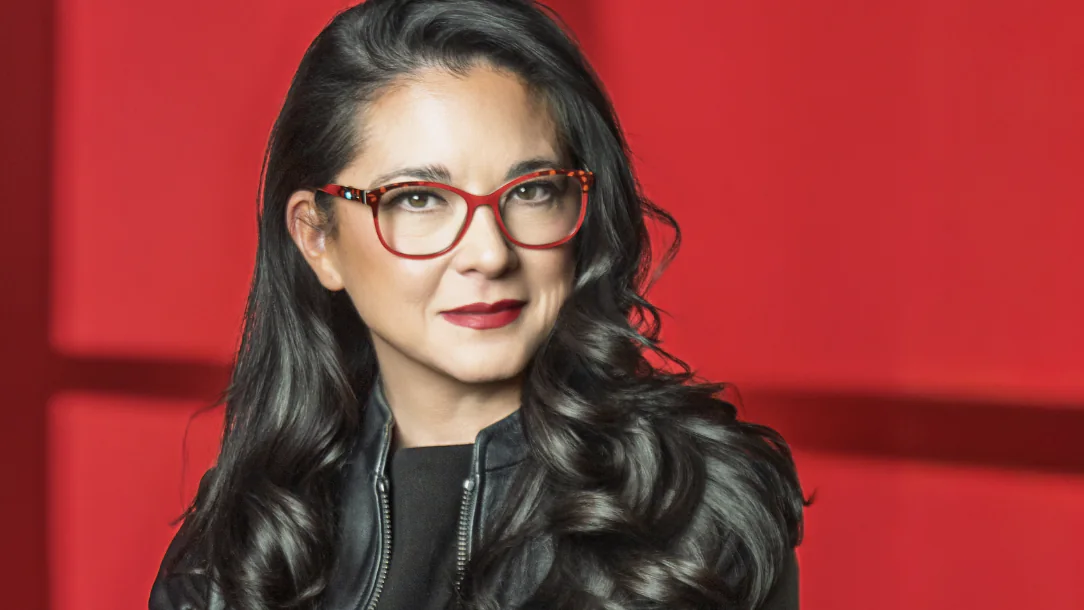
There’s an assumption most people carry: that aging is something that happens to you. But Vonda Wright, an orthopedic surgeon, longevity researcher, and one of the leading voices in women’s health, has built her career on a different premise entirely. One that asserts that we are not helpless victims of the passage of time.
Her philosophy sits at the intersection of medicine, performance, and personal agency—and one that feels particularly at home in a place like Aspen, where the relationship between body and environment is impossible to ignore.
Bryan sat down with Wright to talk about what it actually means to “age with power,” why women’s health is still dramatically underfunded, and how something as simple as movement might be the most overlooked currency of long-term vitality.
Bryan: You’ve positioned your work at the intersection of orthopedics, research, and women’s health. How did that come together?
Vonda: My primary training was as an orthopedic sports surgeon.
I’ve always done research alongside that. I could have followed the path of my mentors—many of whom were among the best surgeons in the world—but instead I chose to focus on musculoskeletal aging and longevity.
My team and I built a research group at the University of Pittsburgh called PRIMA, or Performance and Research Initiative for Masters Athletes, where we studied athletes over 35 who are high-level, but not professionals. Our research reinforced my initial belief that aging does not have to be an inevitable decline—that there are ways to stay healthy, vital, active, and joyful over time.
Bryan: How did women’s health enter the picture?
Vonda: In 2012, I read the research that women make 80% of healthcare decisions—for themselves and for everyone around them—and realized most women were completely underpowered when it came to that.
Given the lack of research, funding, and investment in women’s health, I focused more deliberately on that work, which led to papers such as the Musculoskeletal Syndrome of Menopause, which has been downloaded over 500,000 times.
Bryan: I spend a lot of time running up and down the mountain here, and I feel like I can hold my own—but when I’m with Olympian friends my age, it’s a different level. Even if I train harder than them, I just can’t keep up. Are they simply built differently?
Vonda: I’m the last person to say that you can’t achieve elite goals if you work hard enough, because you definitely can. But in many cases, Olympians have been selected early and trained in systems that refine performance in a way most people never experience.
There are also biological differences. Some elite athletes have more efficient mitochondrial function—they’re able to produce and use energy at a higher level, sustain output longer, and recover faster.
You’ll also see differences in VO2 max and even at the cellular level—things like cytoplasm and how energy systems are structured—which can give them a real physiological advantage. In that sense, they can be quite literally built differently than we mere mortals.
So it’s not just effort—it’s history and biology that create a different baseline for how they move and perform.
But that doesn’t mean you can’t train to be strong, capable, and high-performing in your own right.
Bryan: So what are your top tips for aging for us mere mortals?
Vonda: At its core, it comes down to three things: mindset, movement, and nutrition.
Mindset comes first. I really believe that the first step in aging with power is understanding that you have agency. There is research that shows that up to 47% of how we age is tied to the mindset we bring to it—whether we see ourselves as victims of time or as active participants in shaping what comes next.
From there, the baseline is movement. If you’re starting from scratch, I tell people to walk every day for seven days—just build a streak. Once that foundation is in place, the real game-changer is strength. Not lifting for endurance, but learning—gradually—to lift heavy, because strength is what preserves muscle, mobility, and long-term independence.
And then there is nutrition. I’m pretty unequivocal about sugar—cutting added sugar is one of the fastest ways to reduce inflammation and change how your body feels, especially in midlife. Alongside that, you need adequate protein to support muscle and bone as you age.
The point is not to overwhelm yourself with an impossible standard. It’s to start with a few foundational behaviors that can change the trajectory of how you age.
Bryan: I’ve always felt nutrition to be the hardest one of those to implement. Do you have any tips on how to get that step right?
Vonda: Nutrition feels hard because people think it has to be extreme, and it doesn’t. I’m very clear about one thing—read the label, find the added sugar and cut it out, but that doesn’t mean eliminating carbohydrates.
If I’m somewhere that has the best pasta in the world, I’m going to have the pasta. The point is not restriction for the sake of it—it’s being intentional about what you’re eating and when.
Where I see the biggest gap, especially for women, is protein. Most women are dramatically under-consuming protein, and that directly impacts muscle, bone, and overall strength as they age.
Women often worry about the increased volume that they need to eat, but I encourage them to think in terms of density, not quantity. You can add protein without eating more food: put protein powder in your coffee, add it to yogurt, or choose eggs or Greek yogurt at breakfast. Make sure every meal has a clear protein source.
Another hack you can implement is to target leucine—the amino acid responsible for activating the muscle-building response. You can do this through high-quality protein sources or by using a BCAA supplement to help reach your protein goals more easily.
Bryan: How does the Aspen lifestyle fit into your ethos around longevity?
Vonda: I love coming to Aspen and meeting people who clearly value their health.
There’s a concept Simon Sinek talks about: you’re the average of the four or five people you spend the most time with, which makes Aspen an incredible place if you want to be fitter and stronger.
But there is one drawback to that, which is that there’s so much information and so many voices that it becomes hard to know what to trust. So I always come back to this: know who you’re taking advice from.
I wouldn’t take financial advice from someone who knows how to balance a checkbook but doesn’t have any real experience or credentials. Health is no different.
If someone hasn’t completed their training, isn’t board-certified, or is simply sharing opinions without a solid foundation, then you shouldn’t take their word for it on topics related to fitness and longevity.
And then there’s recovery. In a place like Aspen, the mountains are always calling, but even professional athletes don’t train hard every day. They cycle effort. They build in recovery. That’s where progress actually happens.
So yes, Aspen creates an incredible environment for longevity—but you still have to be intentional. Choose your environment, choose your sources carefully, and respect recovery just as much as effort.
Bryan: Can you talk a bit more about your philosophy regarding recovery?
Vonda: Recovery is critical, but it’s not only about doing fewer reps or not pushing as hard on the mountain.
It’s about eating enough, fasting three hours before bed so that we’re optimizing sleep, going to bed and waking up at the same time so we set our circadian clocks, and getting sunlight as early as we can.
All of this adds to recovery, and it’s even more important in a place like Aspen that is programmed for activity, so that you don’t burn out with no recovery periods.
Bryan: Alcohol is a hallmark of our culture. What is your opinion on its effects on aging?
Vonda: I think alcohol is one of those things people underestimate because it’s so normalized. But physiologically, it works against almost everything we’re trying to achieve as we age.
It increases inflammation, disrupts sleep—which is where recovery actually happens—and it interferes with muscle protein synthesis. If you’re trying to build or even just maintain muscle as you get older, alcohol is not helping you do that.
It’s also very easy to overlook the cumulative effect. It’s not just about one glass of wine—it’s about what happens when that becomes habitual, night after night.
That said, I’m not dogmatic about elimination. I think the key is intentionality. If you choose to drink, do it consciously, not out of routine. Understand the trade-offs, especially around recovery and performance.
Because ultimately, if your goal is to age with strength and capacity, you have to align your habits with that goal—and alcohol is something you need to be honest about in that equation.
Bryan: In the beginning, you spoke about the lack of research and funding in women’s health. Can you expand on that topic?
Vonda: Historically, much of the research in medicine has been done on men and then applied to women. But women are not just smaller versions of men—their physiology, hormones, and life stages require specific study.
In some cases, the gap is almost shocking. We can send 4K images from a rover on Mars back to Earth, but we know almost nothing about the ovary—an organ central to women’s health across the lifespan. At the same time, only around 1% of healthcare research funding is directed toward women over the age of 40, which is exactly when many of the most significant physiological changes begin to occur.
You see this gap most clearly around menopause and musculoskeletal health. Women are often told that losing muscle, gaining fat, or experiencing joint pain is just a normal part of aging, when in reality there are underlying biological changes that we simply haven’t studied deeply enough—or translated into actionable guidance.
Even in areas like strength training, recovery, and nutrition, much of what women are told is based on data derived from male physiology. That leads to confusion, because the advice doesn’t always align with what they’re experiencing in their own bodies.
So what happens is women are left trying to navigate critical life stages without clear, evidence-based direction—not because the answers don’t exist, but because the research hasn’t caught up.
That’s the gap I’m focused on closing—bringing clarity to things that have too often been dismissed as “just aging,” when in fact they’re very real, very measurable, and very addressable.
Bryan: That is shocking to hear. How do we address that imbalance?
If I had just done a 10-billion dollar exit on my business, I’d write the check myself, but unfortunately, that is not reality.
What I am doing is taking a very public, very physical approach to raising both awareness and funding. There’s a challenge called Everesting, where you effectively climb the equivalent elevation of Mount Everest in a single effort—about 29,000 feet. In some formats, that means summiting a mountain multiple times in one day. I’ll be doing that next year on my 60th birthday.
Leading up to it, I’m taking on what’s called the “79”—79 miles over three days, essentially three mountain marathons back-to-back, designed to mimic the climb to Everest Base Camp.
The goal is to galvanize a network of women—many of whom have had significant success in business—as well as philanthropic partners, to raise a million dollars per mile. I’m partnering with the Buck Institute for Research on Aging, one of the leading institutes in the world, to direct that funding into areas where women have been historically overlooked.
The idea is simple: I’ll put my body where my mouth is. I’ll climb the mountain—but only if it brings enough visibility to the fact that there is still a profound lack of research when it comes to women’s health, particularly as they age.
Because until we create both awareness and capital around this issue, the science won’t catch up.
If there’s a thread that runs through Wright’s work, it’s this: aging is not a passive process. It’s something you prepare for, something you train for, and ultimately, something you take ownership of.
The goal is not simply to live longer. It’s to arrive there with the capacity to enjoy it.
Bryan Welker lives and breathes business and marketing in the Roaring Fork Valley and beyond. He is President, Co-founder, and CRO of WDR Aspen, a boutique marketing agency that develops tailored marketing solutions. Who should we interview next? Reach out and let us know bryan@wdraspen.com
Wright, V. J., Schwartzman, J. D., Itinoche, R., & Wittstein, J. (2024). The musculoskeletal syndrome of menopause. Climacteric, 27(5), 466–472.