A Missionary’s Life Between Haircuts and History
After nearly six decades behind the chair, Tom McLain reflects on faith, family, and the long road from Africa to Aspen.
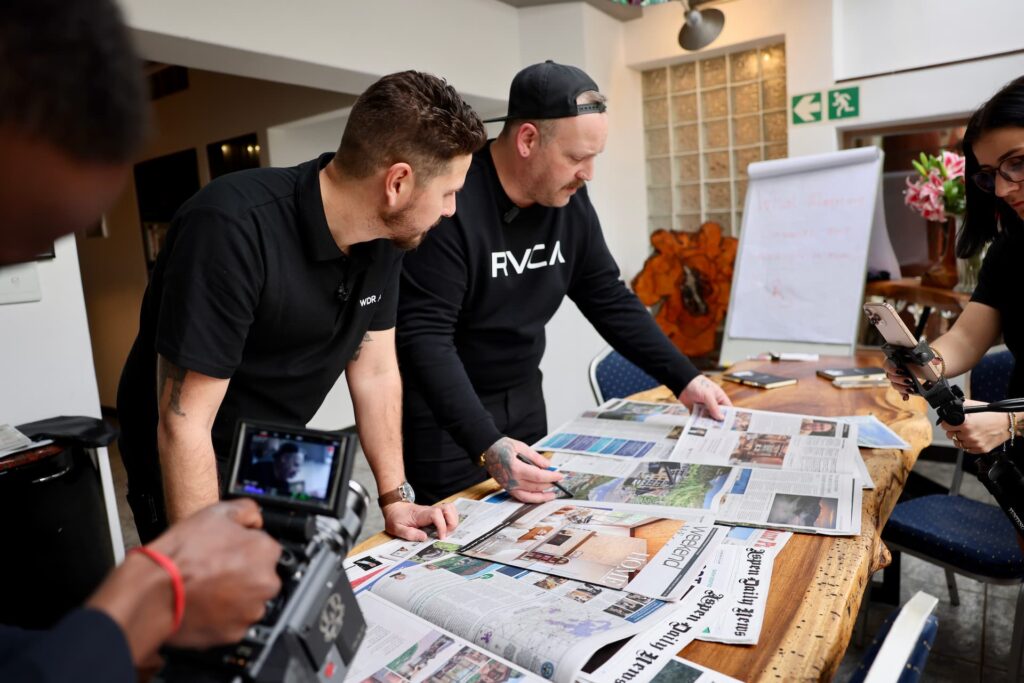
Interview by Bryan Welker and Stefan le Roux | For The Aspen Times
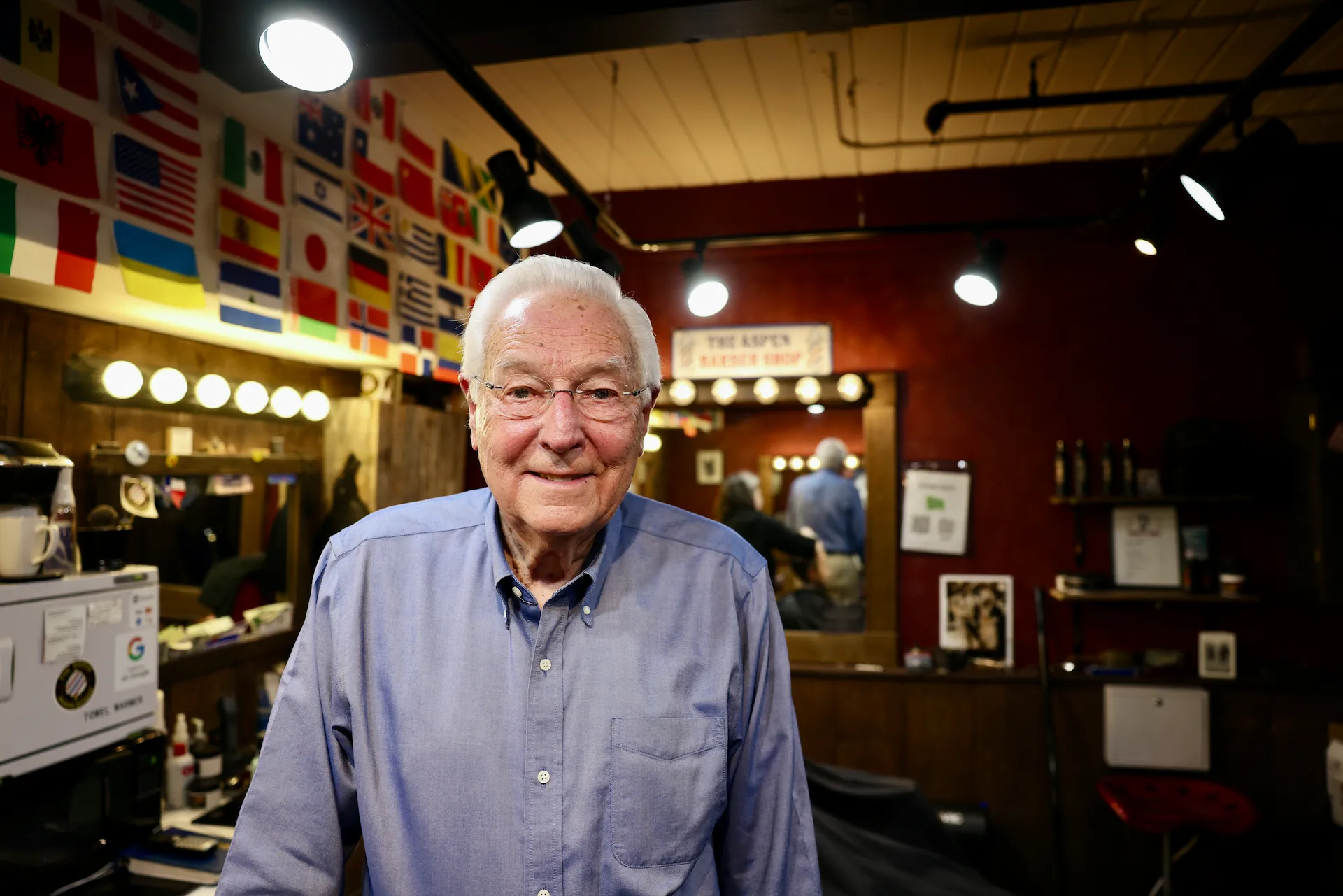
On Saturdays, Aspen Barber Shop hums with the familiar buzz of clippers and the low rhythm of conversation. That’s the one day each week you’ll still find Tom McLain—steady-handed, soft-spoken—providing a service that has spanned generations.
McLain’s story begins far from the Rockies, in missionary work in Louisiana, Arkansas, New York and outposts across Africa, where he and his wife spent a decade volunteering with Jehovah’s Witnesses before settling in Aspen in the mid-1960s. He bought the town’s barbershop in 1968, built his life around faith and family, and helped establish the first local congregation of Jehovah’s Witnesses—a legacy that has now grown to six congregations across the valley.
Now, at 88, McLain is preparing to hang up his scissors after Thanksgiving weekend. Between cuts, he shared stories from six decades of haircuts, hippies, and hard-earned wisdom.
Q: You came to Aspen in 1966, fresh from missionary work in Africa. What brought you here?
Tom:
My wife and I had spent about ten years doing volunteer work as Jehovah’s Witnesses in Louisiana, Arkansas, New York and Africa. When we were expecting our first child, we decided to come somewhere where we could raise a family and make a living. Aspen seemed like the right fit—clean air, mountains, and a small-town feel. The Witnesses were also hoping to start a congregation here, and I was glad to help.
I started working in the Aspen barbershop not long after we arrived, and by 1968, I was able to buy it.
Q: Where was the shop in those early days?
Tom:
It was in Wagner Park, in a little building called the Medical Center that belonged to Bugsy Barnard—he was the mayor and a surgeon! The shop had four chairs back then, and business was strong until the hippies showed up.
Q: Ah, yes—The Great Hippie Migration of 1966. What was that like?
Tom:
Well, there was a “love-in” organized by a rogue Episcopal bishop named Bishop Pike. I couldn’t tell you what a “love-in” is, but that’s what the hippies called it. In any case, Bishop Pike invited everyone from Haight-Ashbury to Greenwich Village, and they all poured in. The park filled up with young people, long hair everywhere.
Once the businessmen saw that, they started letting their own hair grow out. And once it gets down around your ears, you can go a long time without a haircut. Business slowed down a bit after that.
Q: You eventually moved the shop to its current location in 1972. What’s changed since then?
Tom:
Almost everything—and nothing. We’ve gone from four chairs down to one and then back up again. Hairstyles come and go. But people still need a haircut and someone to talk to. I think that’s why the place lasted.
Q: How did faith fit into the picture all these years?
Tom:
For me, the business was always a means to an end. My father and brother were barbers too, so it was something I knew how to do. But my real calling was spiritual work. When we first arrived, there was only one small congregation of Jehovah’s Witnesses in Glenwood Springs. We started one in Aspen, another in Basalt, a few years later. Now there are six throughout the valley. That’s the accomplishment I’m proudest of.
Q: What’s one of the characteristics somebody has to have to survive in this town for 60 years?
Tom:
The town has grown, of course. There’s more money now. But you can’t compare your life to others—you’ll lose your peace that way. I’ve always believed in being content with what you have and counting your blessings.
I bought a little piece of property from a rancher down in the El Jebel area, subdivided it, and gave each of my daughters a lot. They’ve all put homes there. That’s wealth to me—roots, not riches.
Q: You’ve cut a lot of heads of hair over the years—any famous ones?
Tom:
A few. Supreme Court Justices Blackmun and Kennedy both sat in my chair. They knew a bit about Jehovah’s Witnesses because we’ve had several cases before the Court over the years. I also used to cut the hair of Daniel Schorr—the White House correspondent during Watergate—and George Will, the columnist. Aspen’s the kind of place where that sort of thing just happens.
Q: What was the most turbulent time in Aspen, in your view?
Tom:
Probably toward the end of the hippie era. There was a bombing downtown, and another incident near the Aspen Club. It surprised me—this peaceful little town, seeing that kind of trouble. But Aspen’s always had a rebellious streak; maybe that’s part of its character.
Q: You mentioned Bugsy Barnard earlier. I heard there’s a story there.
Tom:
There is. One day, I got into some bushes while we were tossing a football out front and had an allergic reaction. Bugsy, being a doctor, gave me a shot and wouldn’t let me pay him—said I’d give him a free haircut sometime. A year later, he came by asking for a donation to something we didn’t agree with. When we politely declined, his secretary was down at the shop two minutes later—with a bill for that shot!
Q: You raised a family here. What has Aspen given you in return?
Tom:
It gave me the chance to live simply and raise my kids somewhere clean and wholesome. The mountains, the air, the lifestyle—it’s hard to put a price on that.
I’ve lived in places like Nairobi, Kampala, Lilongwe, and Harare, all of them beautiful in their own way. But Aspen’s beauty, to me, comes from the life I built here.
Q: You returned to Africa again in the 2000s, didn’t you?
Tom:
Yes, in 2001. I went back for five years to Malawi, Zimbabwe, and Zambia, teaching English comprehension to Bible translators. I left Ross Thompson to run the shop while I was gone, and when I came back, he bought it. After him came Greg Castillo—“the cowboy”—and now Eric, the current owner. They’ve each done a fine job keeping it going.
Q: Looking back, do you have any regrets?
Tom:
Not really. Maybe I should’ve bought more land when I had the chance, but if I’d done that, I might have gotten distracted from what mattered most. I never got rich, but I always got by.
Q: What advice would you give to someone starting out in Aspen today?
Tom:
Be content. Don’t measure yourself by other people’s lives or their money. And if you’re here for the right reasons—whether it’s family, work, or faith—you’ll find a way to stay.
Q: You’ve mentioned giving $70 haircuts for $30. Is that your final special?
Tom:
That’s right. We had a guy come in once and tell us we should be charging seventy bucks to keep up with inflation. I told him, “You’re right, it’s a $70 haircut, but we’ll still only charge you $30.”
Q: You’re retiring after nearly sixty years in the chair—how can people book one last haircut before you hang up the scissors for good?
Tom:
I’ll still be in the shop on Saturdays through Thanksgiving weekend. Giving folks one last opportunity to get in the chair before I call it a career. After that, I’m looking forward to spending more time with my family and helping out where I can, just like I always have.
After nearly sixty years, Tom McLain’s departure feels like the end of a small-town chapter—a reminder that behind every long-standing business is a life of quiet conviction and daily service. The legacy he leaves isn’t measured in the number of haircuts or years on the lease. It’s measured in the faith, humility, and consistency that turned a simple barbershop into a cornerstone of Aspen life.
Bryan Welker lives and breathes business and marketing in the Roaring Fork Valley and beyond. He is President, Co-founder, and CRO of WDR Aspen, a boutique marketing agency that develops tailored marketing solutions. Who should we interview next? Reach out and let us know bryan@wdraspen.com